
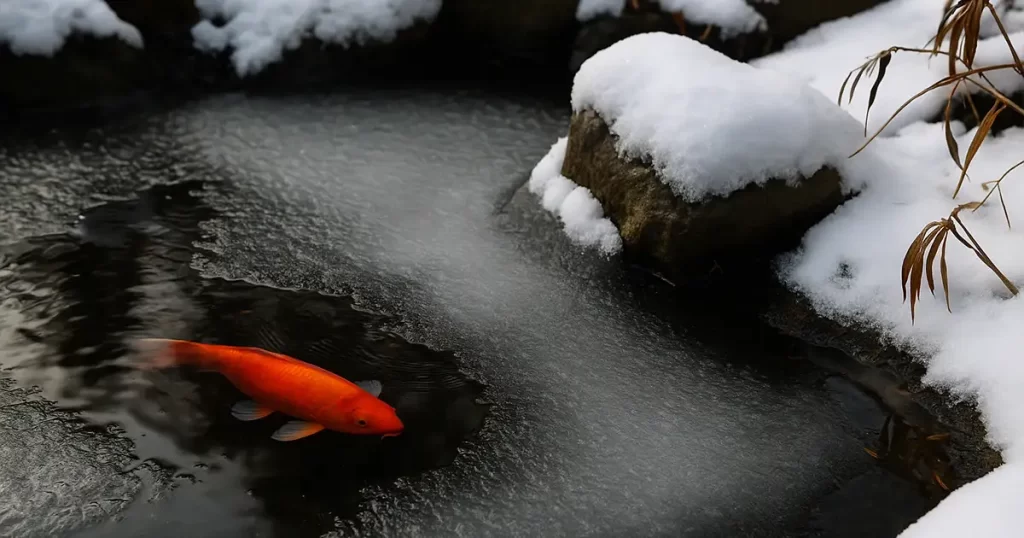
If you own a koi pond, one of the biggest seasonal challenges is keeping your fish safe and healthy when temperatures drop. Knowing what to do with koi pond in winter is key to keeping your fish healthy through the colder months.
Even in Central Florida, where winters are mild compared to northern states, sudden cold snaps can stress koi, so preparation and consistent pond maintenance make all the difference.
With proper pond depth, clean water, steady oxygen, and regular monitoring of equipment and water temperature, koi can make it through winter and be ready to thrive again in spring.
How Koi React to Cold Water
Koi are cold-blooded fish, so their activity slows as the water temperature drops. In winter, they enter a slower, semi-dormant state often called torpor.
Their swimming becomes sluggish, their metabolism slows, and they usually gather at the bottom of the pond where the water stays more stable.
At this stage, koi survive off stored energy and natural algae, which means feeding practices must change well before freezing weather arrives. Their care depends on stable pond conditions.
Common Winter Pond Problems
Winter can create several challenges that are easy to overlook if you’re not actively monitoring your pond.
Ice formation is one of the most obvious issues in colder climates, as it can block oxygen exchange and trap harmful gases beneath the surface. Reduced water circulation can also lead to stagnant areas, affecting oxygen levels and overall pond health.
In addition, pumps and plumbing systems may be at risk of damage if temperatures drop too low. Sudden temperature swings can also stress koi, especially if the pond environment isn’t stable.
Preparing Your Pond Before Winter
Good preparation and consistent pond maintenance in the fall set the stage for healthy fish in winter.
1. Check Pond Depth
Your pond should be at least 3 to 5 feet deep. This ensures a warm enough zone at the bottom where koi can rest. Shallow ponds are at greater risk of freezing or fluctuating temperatures, which can stress fish.
Even though Central Florida rarely sees hard freezes, deeper water still provides stability during sudden cold snaps.
2. Clean Out Debris
Remove leaves, grass, and organic matter before temperatures drop. As these materials break down, they release gases and toxins that can harm koi.
Regular pond cleaning in the fall is one of the most important steps you can take for winter prep. It improves oxygen flow and reduces sludge buildup that can become a problem in spring.
3. Adjust Feeding Practices
Feeding should always follow the water temperature:
- 60–65°F (15–18°C): Start reducing how often you feed and switch to cold-water koi food, which is lower in protein and easier to digest.
- Below 50–55°F (10–12°C): Stop feeding altogether. Even if koi look hungry, their digestion slows so much that food can rot in their system and cause serious health problems.
4. Health Checks
Inspect koi for parasites or injuries before the season changes. Treating issues in fall is easier because koi immune systems weaken in colder water. A simple checkup now helps prevent springtime outbreaks.
Managing the Pond During Winter
Once winter arrives, your focus shifts from preparation to maintaining a stable environment.
1. Keep Oxygen Flowing
Gas exchange is critical. Without it, harmful gases can build up under ice or stagnant water.
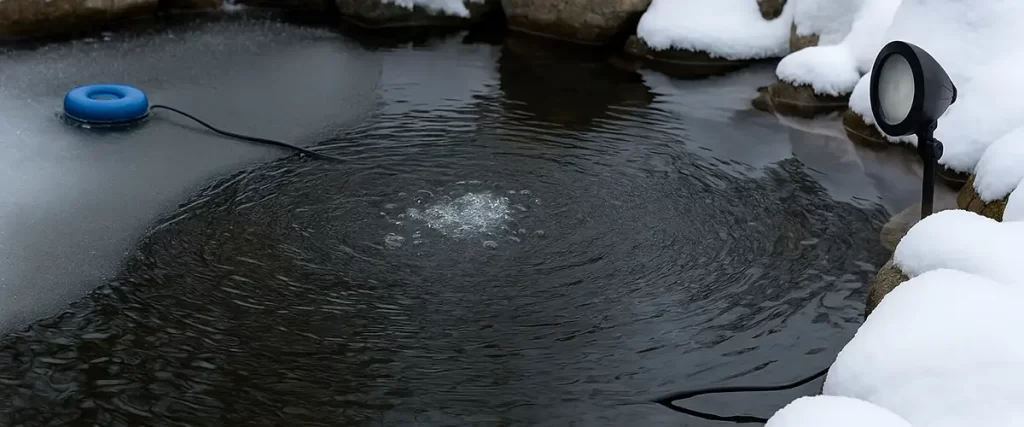
- De-icers or Heaters: Use a floating de-icer to keep a small hole open if you live in an area prone to freezing nights.
- Aerators: A bubbler or air stone adds oxygen. Place it near the middle depth of the pond, not at the very bottom, so you don’t disturb the warmer resting zone of the fish.
- Never Smash Ice: Breaking ice with force can shock or kill koi. If ice forms, melt a hole gently with warm water or a heated device.
2. Control Water Movement
Strong water circulation cools the pond too quickly. Shut down waterfalls or large pumps in winter, especially in cooler climates. If you do want circulation, use a small pump with gentle flow.
3. Monitor Water Quality
Test for ammonia, nitrite, nitrate, and pH through the season. Even when fish aren’t eating, waste still accumulates. In smaller ponds, rain can dilute water and drop pH, so be prepared to buffer it with baking soda if needed. Adding cold-water bacteria products can also help break down waste during the winter slowdown.
4. Cover and Insulate
Covering your pond with greenhouse plastic, polycarbonate sheets, or a solar pool cover helps stabilize the temperature. In Central Florida, this step may be optional, but in sudden cold snaps, a cover reduces stress on koi and keeps equipment running efficiently.
Alternative Solutions for Extreme Cold
If your pond is shallow or you expect freezes, you may choose to move koi indoors. A large tank in a garage or enclosed space can work if it has filtration, aeration, and netting to prevent jumping.
For most Florida pond owners, though, leaving koi outside in a properly prepared pond is the better long-term solution.
Ongoing Winter Care
Winter koi care isn’t just a one-time setup; it requires attention.
- Check equipment daily to confirm de-icers and aerators are running.
- Watch koi behavior for any signs of stress. While movement is minimal, gasping or floating near the surface may signal oxygen problems.
- Track water temperature with a pond thermometer so you know when it’s safe to resume feeding in spring.
Why It Matters in Warmer Climates
In places like Central Florida, ponds may not freeze, but winter care is still essential.
Temperature fluctuations, cooler nights, and reduced sunlight can still affect water balance and fish behavior. Without proper maintenance, algae growth, poor circulation, and water quality issues can still develop.
Because mosquitoes and algae can remain active year-round in warmer climates, maintaining water movement and filtration is critical even during winter months.
Keeping Your Koi Pond Healthy Through Winter
Winter care doesn’t have to be complicated. Focus on three essentials:
- prepare your pond before temperatures drop
- maintain water quality and oxygen flow through the season
- check your koi regularly for signs of stress
Even in Central Florida, sudden cold snaps can put pressure on your pond system, so being ready makes all the difference.
A koi pond that’s cleaned, well-maintained, and monitored through the colder months will reward you with healthy, active fish once spring returns.
If you’d like professional help, Site Pros Landscaping offers reliable pond cleaning and pond maintenance services in Central Florida to make winter care stress-free. Contact us today at (407) 480-0713 to schedule your service.
Frequently Asked Questions About Koi Pond Care in Winter
Do koi need to be fed during winter?
Koi should be fed less as temperatures drop, and feeding should stop when water temperatures fall below about 50°F (10°C).
Can koi survive if the pond freezes?
Yes, as long as there is a small opening in the ice for oxygen exchange and the water conditions remain stable.
Should I turn off my pond equipment in winter?
It depends on your climate. In colder regions, some equipment should be shut down to prevent freezing damage, while in milder climates, systems can often continue running.
How do I keep my pond from freezing completely?
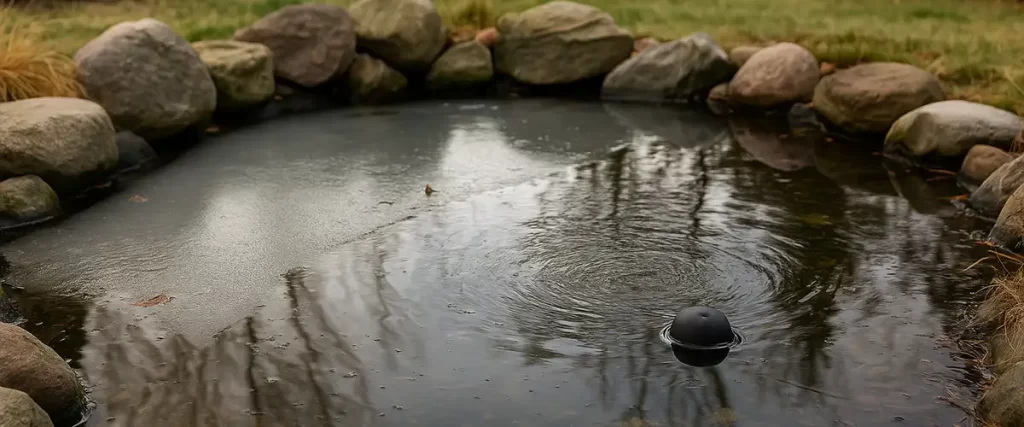
Using an aerator or pond de-icer helps maintain an opening in the ice and supports oxygen exchange.
Is winter maintenance necessary in warmer areas?
Yes. Even without freezing, seasonal changes can impact water quality, fish health, and algae growth.