
If you live in a hurricane-prone area like Central Florida, protecting your backyard pond is not optional. Heavy rain, high winds, flooding, and contaminated runoff can damage the pond structure, harm fish, and destroy water quality in a single storm. Knowing how to protect a backyard pond from hurricanes starts with preparation before the storm, not cleanup after it.
This guide focuses on practical, homeowner-level actions that actually reduce risk. No theory. No overbuilding. Just what works.
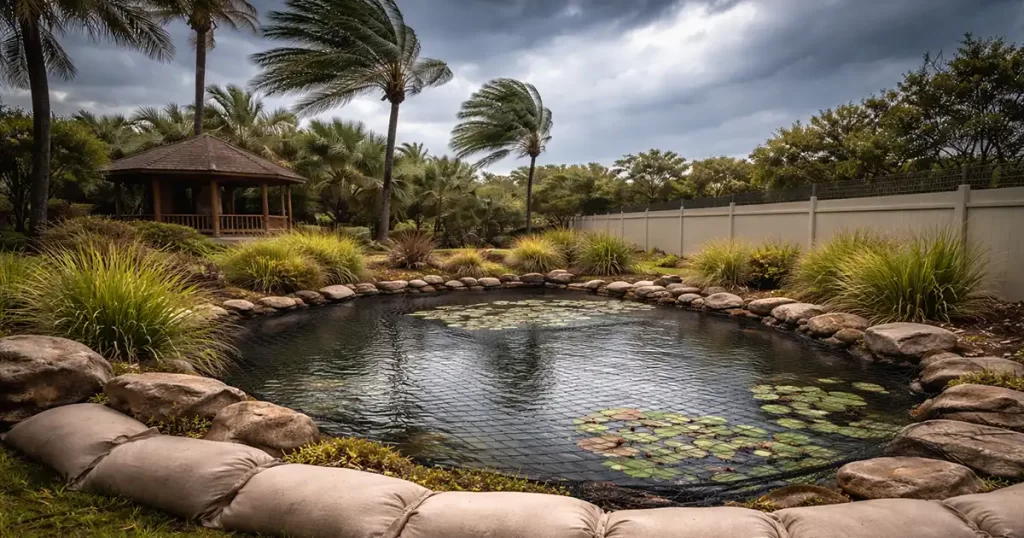
How to Protect a Backyard Pond From Hurricanes (Quick Summary)
- Lower the pond water level before the storm
- Redirect runoff away from the pond
- Secure or remove pumps, filters, and electrical equipment
- Reinforce pond edges to prevent erosion
- Cover the pond with netting to block debris
- Prepare aeration or backup power for oxygen loss
- Inspect and rebalance water immediately after the storm
Why Hurricanes Are Especially Hard on Backyard Ponds
A backyard pond is an open system. During a hurricane, it takes the hit from every direction at once.
- Wind drops debris into the water.
- Rain overwhelms the pond’s capacity.
- Floodwater carries chemicals, oil, fertilizer, and bacteria straight into the ecosystem.
In Central Florida, sandy soil makes things worse. Water moves fast and drains poorly. That combination leads to overflow, erosion, and sudden water chemistry swings that fish cannot handle.
Most pond damage happens because water goes where it should not. Your job is to control that movement.
1. Start With Water Level and Drainage Control
The single most effective step is managing water volume.
Lower the pond water level slightly before a storm arrives. A few inches is enough. This creates buffer space for heavy rainfall and reduces the chance of overflow.
Next, look at how water moves around the pond.
Clear any drainage paths, spillways, or overflow channels. If water cannot escape the area, it will find the weakest edge of your pond instead.
If your yard slopes toward the pond, redirect that flow. Small berms, shallow swales, or adjusted grading can keep stormwater from rushing straight into the pond basin.
2. Reinforce Pond Edges to Prevent Washouts
Pond edges fail long before liners do.
Oversaturated soil collapses. Stone shifts. The shoreline caves in. Once erosion starts, it spreads fast.
If you notice collapsed edges, liner shifts, or structural damage after heavy rain, a professional pond repair service can stabilize the pond and prevent further erosion.
Reinforce vulnerable edges with stone, compacted gravel, or temporary sandbags before the storm. Focus on low points where water naturally collects.
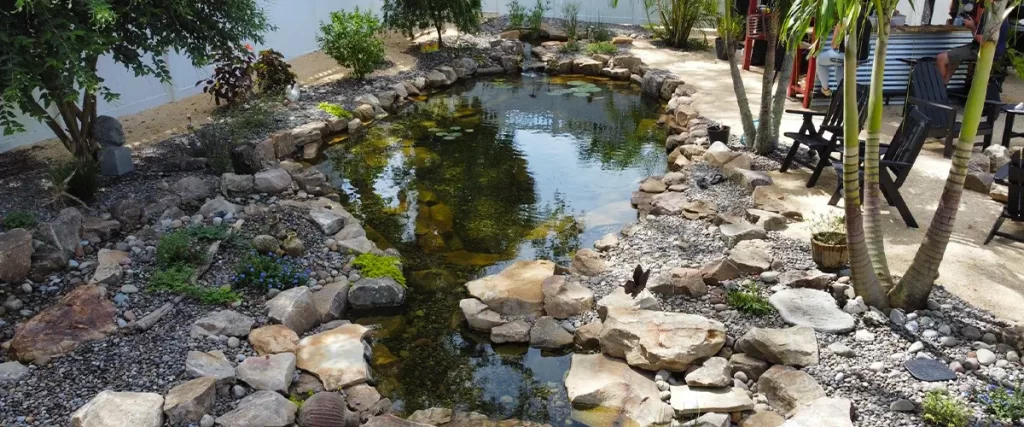
Planting native vegetation around the pond helps in the long term. Deep root systems stabilize soil and slow runoff before it reaches the water.
3. Secure Equipment and Power Sources
Electrical equipment is vulnerable during hurricanes.
Unplug pumps, filters, UV clarifiers, and lighting before the storm. If possible, remove them and store them indoors.
If you rely on aeration or filtration to keep fish alive, a backup power plan matters. Even a small portable generator can keep oxygen levels stable during extended outages.
Loose equipment around the yard is another risk. Outdoor furniture, pots, tools, and décor should be secured or moved away from the pond so they do not become airborne debris.
4. Protect Fish From Stress, Debris, and Oxygen Loss
Fish deaths after hurricanes are usually caused by stress, low oxygen, or polluted water.
Give fish places to hide. Rock caves, submerged structures, or simple PVC sections allow them to escape turbulence and flying debris.
Covering the pond with a secured net helps in two ways. It blocks debris and reduces the risk of fish jumping out during extreme agitation.
Oxygen loss is a real threat after storms. Heavy rain and decaying organic matter consume oxygen quickly. Once the storm passes, restoring aeration should be a priority.
For high-value fish like koi, have a contingency plan. Temporary holding tanks, stock tanks, or inflatable pools with aeration can be lifesavers if the pond becomes unsafe.
5. Prevent Runoff Contamination Before It Happens
Stormwater runoff is often more dangerous than wind damage.
Runoff carries fertilizers, pesticides, oil, and bacteria from driveways and streets. Once it enters the pond, water chemistry can swing hard and fast.
Grade the surrounding area so that runoff flows away from the pond, not into it.
Vegetative buffer zones help filter contaminants before they reach the water. Native plants are especially effective because they tolerate flooding and stabilize soil.
After the storm, always assume contamination is possible until proven otherwise.
What to Do Immediately After the Hurricane
Once conditions are safe, inspect the pond before turning anything back on.
Check the liner, edges, and surrounding soil for erosion or collapse. Remove debris slowly so you do not stir up sediment.
Inspect pumps and wiring for water damage before reconnecting power.
Test the water. pH, ammonia, nitrites, and oxygen levels can all shift after a storm. If levels are off, perform a partial water change and restore beneficial bacteria.
After major storms, many homeowners choose to schedule a pond maintenance service to handle water testing, debris removal, filter cleaning, and system checks before small issues turn into long-term damage.
Watch your fish closely over the next several days. Lethargy, gasping at the surface, or erratic swimming are signs that something is still wrong.
Design Choices That Make Future Hurricanes Easier
If you are building or upgrading a pond, design matters.
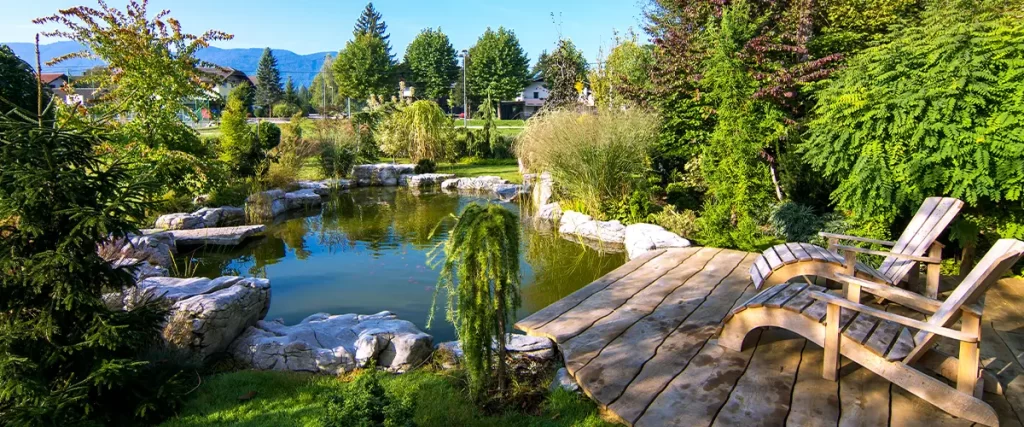
Avoid placing ponds in the lowest part of the yard where runoff naturally collects. Keep a safe distance from foundations and hard surfaces that funnel polluted water.
Proper sizing helps. A pond that is too small for the surrounding drainage area will always struggle during storms.
In hurricane-prone regions, adding a secondary drainage area or shallow retention zone can protect both the pond and the rest of the landscape.
Preparing Your Backyard Pond for Future Hurricanes
Knowing how to protect a backyard pond from hurricanes is mostly about preparation done ahead of time.
Lowering water levels, controlling runoff, securing equipment, and reinforcing pond edges all reduce the risk of serious damage once a storm hits.
Hurricanes are unpredictable, but pond problems usually follow the same patterns. Overflow, erosion, poor water quality, and oxygen loss are what cause most post-storm issues.
With the right steps in place, your pond is far more likely to get through hurricane season without major setbacks. Fish stay healthier, cleanup is simpler, and recovery becomes manageable instead of stressful.
If you want help preparing your pond before hurricane season or need professional support after a storm, contact Site Pros Landscaping to discuss your options. You can reach our team at for guidance on pond maintenance, repairs, and post-storm care.
Frequently-Asked Questions
How far should I lower my pond’s water level before a hurricane?
Lowering the water level by a few inches is usually enough to create space for heavy rainfall without stressing fish. Avoid draining too much, as fish still need stable conditions to stay healthy.
Should I leave my pond pump running during a hurricane?
No. Pumps, filters, and lighting should be unplugged before the storm to prevent electrical damage. Equipment can be reinstalled and tested once conditions are safe.
Can hurricane runoff harm pond fish?
Yes. Stormwater often carries fertilizers, oil, and other contaminants into ponds. Redirecting runoff and using plants around the pond edge helps reduce this risk.
Is it safe to cover a pond during a hurricane?
Yes, as long as the netting or cover is securely fastened. A proper cover helps block debris and reduces the chance of fish jumping out during extreme conditions.
Do backyard ponds in Central Florida need extra storm preparation?
They often do. Sandy soil and heavy rainfall increase the risk of flooding and erosion, which makes drainage control and edge reinforcement especially important.