
Have you ever walked past a fish tank and actually stopped to stare at it? Not because of the fish, but because the whole thing looked like a miniature underwater forest or mountain range that somehow came to life in a glass box. That’s aquascaping.
Aquascaping is the practice of arranging aquatic plants, rocks, driftwood, and other natural elements in your aquarium tank to create stunning underwater landscapes. Think of it as gardening meets interior design, but underwater.
The whole art form has exploded over the past few decades, with competitions drawing entries from around the world. If you’re interested in getting into the hobby, we’ll walk you through the basics of aquascaping and how to get started.
Understanding the Basics of Aquascaping
An aquascape aquarium isn’t just about making things look pretty. You’re creating an entire ecosystem where plants grow, fish thrive, and beneficial bacteria keep everything balanced.
| Element | Purpose |
| Hardscape Materials | Creates structure and focal points |
| Live Plants | Provides oxygen, controls algae, adds beauty |
| Fish | Adds movement, produces nutrients for plants |
| Technical Equipment | Maintains water quality and plant health |
The main focus in aquascaping is always the plants and hardscape. Fish become supporting actors rather than the stars of the show. You’ll often see aquascapes with only a few fish, because the planted aquarium itself is the real attraction.
Your aquatic plants need the right conditions to flourish. That means thinking about carbon dioxide levels, nutrient levels in the water, and how much light your plants are getting. Freshwater plants can be surprisingly picky about water parameters.
Popular Aquascaping Styles You Should Know
Different aquascaping styles have emerged over the years, each with its own rules and aesthetic. Let me walk you through the main ones.
Nature Aquarium Style
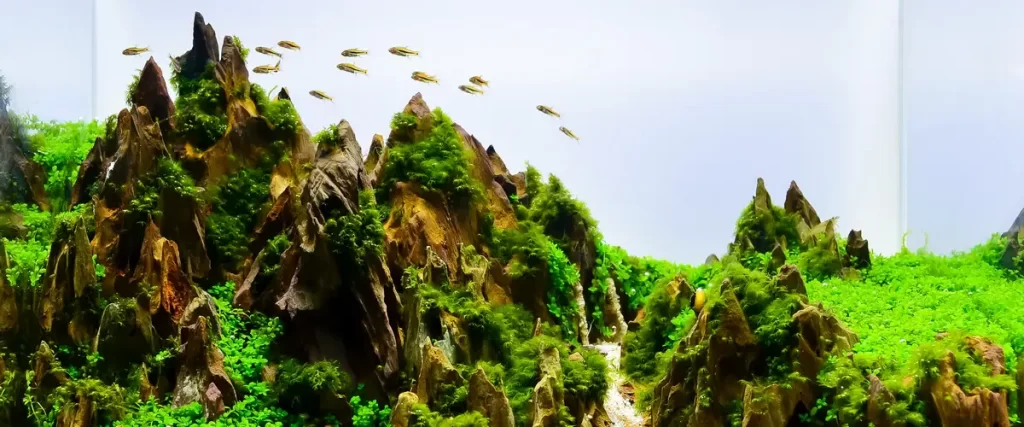
Takashi Amano basically invented this approach in the 90s. The nature aquarium style tries to recreate natural landscapes you’d see in the wild: rolling hills, winding paths, and dramatic rock formations. Everything’s positioned using the golden ratio to create that perfectly balanced look.
Dutch Aquarium
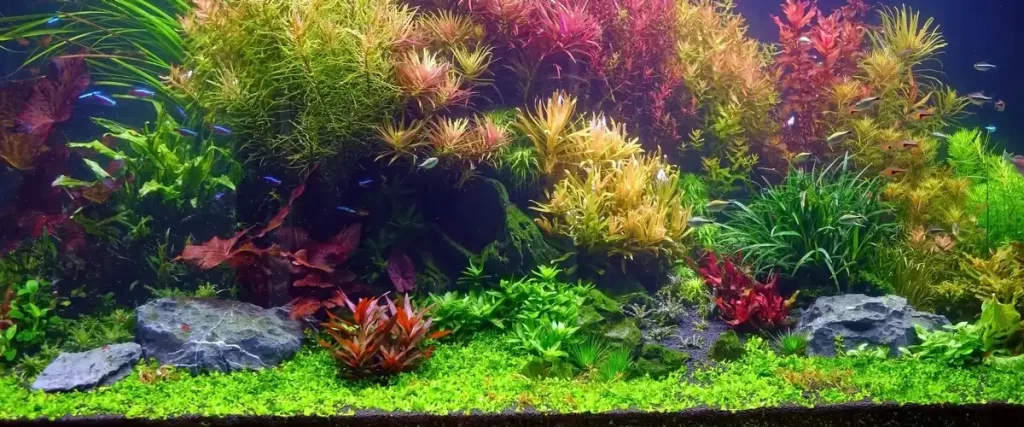
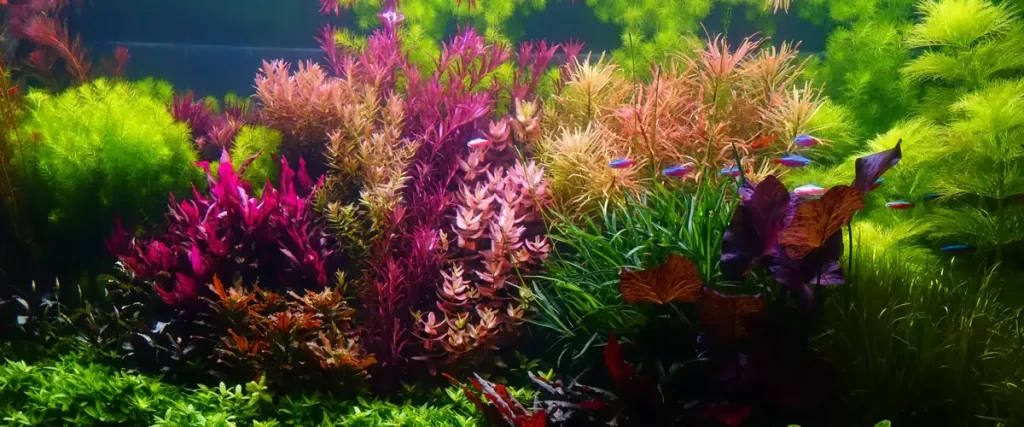
The Dutch aquarium style is all about the plants themselves. Rows and rows of different plants arranged by color, texture, and height. It’s like an underwater garden where plant types are carefully selected and positioned. Dense, lush, and incredibly green.
Iwagumi Style
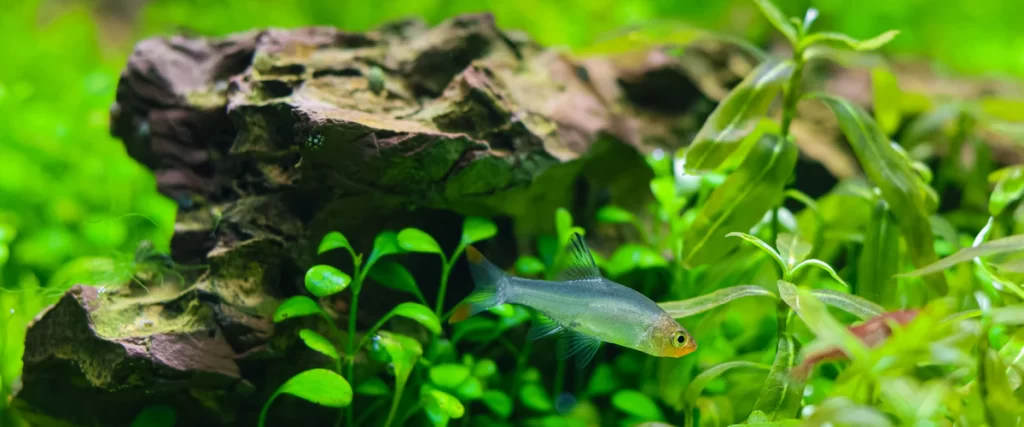
The iwagumi aquascaping style is the minimalist of the bunch. Main stones are arranged in odd numbers (usually three or five), with a dense carpet of low-growing plants covering the substrate. One large stone serves as the focal point, with secondary stones supporting the composition. Clean lines, open space, and a sense of calm.
Jungle Style
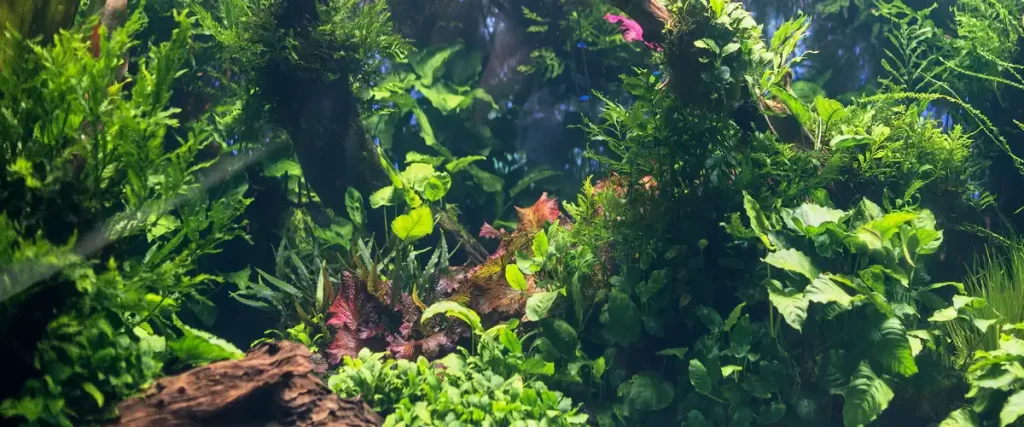
Want that wild, untamed appearance? Jungle style lets plants grow more freely without precise control over every stem. Tall plants in the back, floating plants drifting at the surface, everything growing thick and full. It’s organized chaos that somehow works.
Key Elements That Make an Aquascape Work
Getting your planted tank to actually thrive takes more than just sticking some plants in water and hoping for the best.
The Plant Selection
You’ll work with three basic categories. Epiphyte plants like Java moss attach to rocks and wood without needing substrate. Carpeting plants spread across the bottom to create that dense carpet look. Background plants grow tall, creating depth. Hardy species work better for beginners than delicate varieties that need constant attention.
Different plants need different things:
- Some block light and shade the plants below them
- Plant roots of certain species dig deep, while others barely anchor
- Terrestrial plants won’t survive underwater, no matter how much you want them to
- Healthy plants compete with algae for nutrients, helping control algae naturally
Hardscape Materials Matter
Your rocks and driftwood create the bones of your aquascape design. Main stones set the focal point and establish your composition. Smaller stones fill in gaps and create secondary interest. Wood adds texture and gives epiphyte plants somewhere to attach.
The U.S. Geological Survey has resources on aquatic ecosystems that can help you understand how natural processes interact in freshwater environments. Understanding these natural systems makes you better at recreating them.
Technical Requirements
Plant growth depends on a delicate balance of factors:
- Carbon dioxide injection helps plants grow faster and stay healthier
- Aquarium filters keep water chemistry stable and remove fish waste
- Lighting schedules affect plant health and control algae
- Water circulation prevents dead spots where debris collects
The Fish Situation
Remember, in a nature aquarium, fish are there to complete the ecosystem, not dominate it. Fish waste actually provides nutrients for plant growth. But too many fish create too much waste, which can throw off your water quality and nutrient levels. Start with smaller tanks if you’re new to this, and keep your fish population light.
Getting Started with Your First Aquascape
Want to start aquascaping? It’s not as complicated as it seems, but it does require patience.
Pick your aquascaping style first. That’ll guide everything else. Beginners often do better with nature style or jungle approaches because they’re more forgiving than the precise iwagumi style.
Start gathering your materials:
- Quality substrate for plant roots
- Hardscape materials that fit your vision
- A variety of plant types for visual interest
- Equipment to maintain water parameters
Arranging plants in an aesthetically pleasing manner takes practice. Don’t expect perfection on day one. Plants grow, things shift, and you’ll make adjustments. That’s part of the fun.
You know what’s interesting? The same principles that make freshwater aquascaping work also apply to outdoor water features. If you’re thinking about building a pond for your yard, you’re essentially creating a larger-scale aquascape. In pond building, natural elements, plant selection, water quality, and the delicate balance among all the components are interconnected.
Frequently Asked Questions
How much does it cost to start aquascaping?
You can start small with a basic setup for a few hundred dollars. Smaller tanks are easier to maintain than you think. As you get more serious, costs go up for better lighting, CO2 systems, and premium plants. But you don’t need to break the bank right away.
How often should I change water in a planted aquarium?
Most aquascapers do weekly water changes of 20-30%. This removes excess food and waste while replenishing nutrients. The golden rule is consistency. Regular maintenance prevents problems before they start.
Can aquascaping work in small tanks?
Absolutely. Some of the most impressive aquascapes are in tanks under 10 gallons. Smaller tanks actually force you to be more creative with your space. Just remember, they need more frequent maintenance because water parameters can shift more quickly in smaller tanks.
What’s the easiest aquascaping style for beginners?
Start with nature style or jungle style. They’re more forgiving than precise styles like iwagumi. You can make small mistakes without ruining the whole aesthetic. Plants hide imperfections as they grow in, and the natural look doesn’t require perfect symmetry.
Let Us Handle Your Water Feature Dreams
Creating a beautiful aquascape takes time, knowledge, and, honestly, a lot of trial and error. Now imagine applying those same skills to a full-scale outdoor pond. The complexity multiplies.
Water quality issues affect a larger volume. Plant selection now includes both submerged and marginal species. The natural beauty you’re trying to achieve requires even more expertise. That’s where we come in.
Whether you’re dreaming of a koi pond with the tranquility of a nature aquarium or a naturalistic water feature with the untamed appearance of jungle style, we’ll make it happen. Call us at (407) 480-0713 or message us here to start planning your outdoor aquascape.