
If you’re comparing an ecosystem pond vs koi pond, you’re already past the basic “natural vs artificial” conversation. The real question is what kind of system you want to manage in your backyard.
An ecosystem pond is built to function like a balanced water garden. A koi pond is engineered specifically to protect and showcase fish. Both can look beautiful.
The difference is how they are built, how they handle waste, and how much responsibility you are taking on long-term.
Let’s break it down clearly.
Quick Comparison: Ecosystem Pond vs Koi Pond
| Feature | Ecosystem Pond | Koi Pond |
|---|---|---|
| Primary Goal | Natural water garden with light fish | Dedicated fish habitat |
| Depth | Usually 1 to 3 feet | Typically 3 to 6 feet |
| Bottom | Gravel and rock | Smooth liner or concrete |
| Filtration | Biological and plant-based | Mechanical with bottom drains |
| Fish Load | Light and controlled | Heavy, built for large koi |
| Plants | Essential for balance | Minimal or none |
| Maintenance | Seasonal and moderate | Ongoing and equipment-driven |
| Upfront Cost | Moderate | Higher due to equipment |
| Energy Use | Lower | Higher due to filtration systems |
Now let’s go deeper into what these differences actually mean for your backyard.
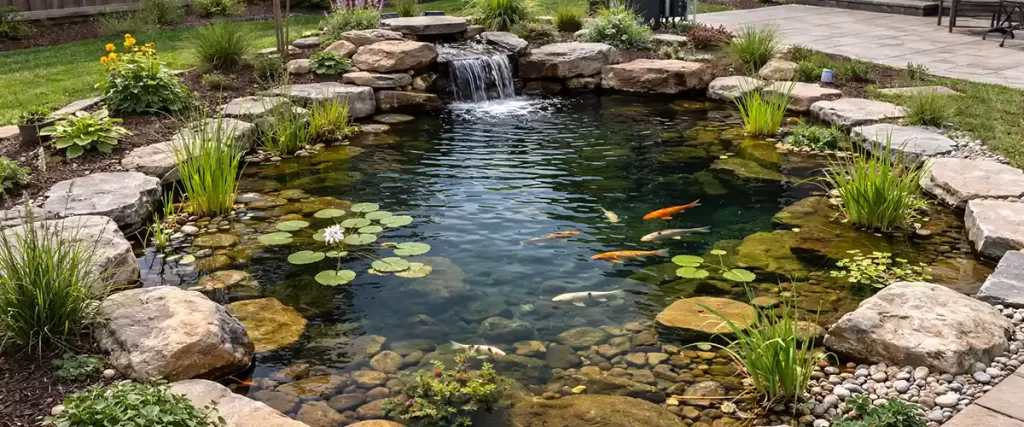
What Is an Ecosystem Pond?
An ecosystem pond is designed to work with nature.
It uses gravel, rocks, beneficial bacteria, aquatic plants, and a circulation system to create biological balance. Instead of aggressively removing all waste, the system transforms it.
Fish waste becomes nutrients. Plants absorb excess nutrients. Bacteria break down organic debris.
These ponds are usually built with irregular shapes, shallow shelves for plants, and a more natural appearance. They blend into the landscape and often attract frogs, dragonflies, and birds.
Depth is typically between one and three feet. That works well for water plants and moderate pond fish populations.
The key thing to understand is this: ecosystem ponds rely on balance. If you overload the pond with too many fish, especially koi, that balance breaks down.
When designed properly and stocked responsibly, they can be low-maintenance and visually natural.
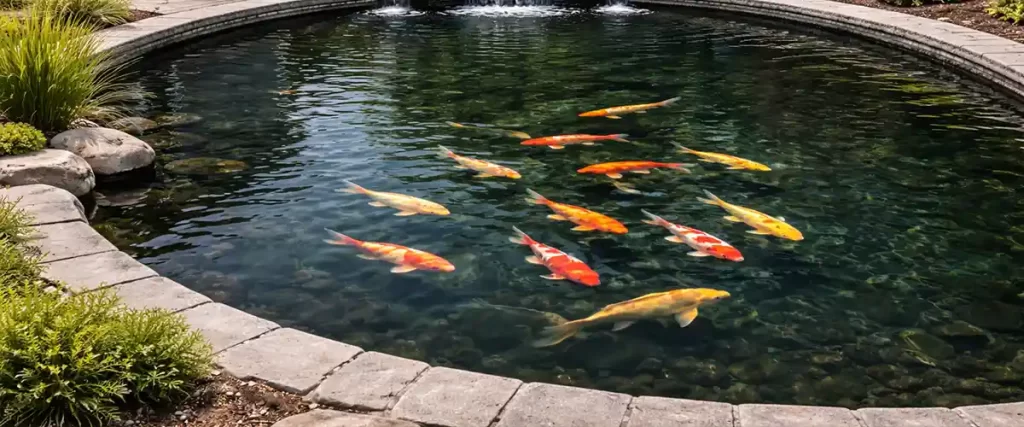
What Is a Koi Pond?
A koi pond is built around fish health first.
Large koi produce a serious amount of waste. That waste cannot sit in gravel. It must be removed constantly. That is why traditional koi ponds use smooth bottoms and bottom drains.
Bottom drains pull heavy waste off the pond floor 24 hours a day. That waste is routed into external filtration systems such as settlement chambers, bead filters, and UV clarifiers.
These ponds are deeper. Three to six feet is common. Depth protects fish from predators and helps regulate water temperature.
Plants are usually minimal because koi dig, uproot, and eat vegetation. A koi pond is controlled. It is structured. It is equipment-driven.
If a pump stops running, water quality declines quickly. That means more responsibility and closer monitoring.
The Real Difference: Waste Management
The biggest difference between an ecosystem pond vs koi pond is how waste is handled.
In an ecosystem pond, waste settles into gravel where bacteria and plant roots break it down over time. This works well for lighter fish loads.
In a koi pond, waste is removed immediately through bottom drains and mechanical filtration. The goal is to keep the water as clean and stable as possible for expensive fish.
Trying to treat a heavy koi population like a light ecosystem pond is where problems start. Muck buildup increases. Water quality drops. Maintenance becomes expensive and frustrating.
Also Read: What to Do With Koi Pond in Winter
Can Koi Live in an Ecosystem Pond?
Yes. But there are limits.
Many homeowners keep koi in ecosystem ponds successfully. The key is strict population control. Overcrowding is the main cause of failure.
A responsible guideline often used in the industry is roughly one mature koi per 200 gallons of water. Pushing beyond that stresses the system.
If your goal is to raise large, high-value koi, a traditional koi pond is safer and more predictable.
If you want a few koi as part of a natural water garden, an ecosystem pond can work when designed properly.
Clarity of expectations matters here.
Depth, Predators, and Climate
Depth plays a major role in design decisions.
Koi ponds are built deeper to protect fish from herons, raccoons, and other predators. In colder climates, depth also prevents full freeze-over. In warmer regions like Florida, freeze protection is less of a concern, but predator pressure is real.
Ecosystem ponds are often shallower with plant shelves. They rely more on hiding spaces like rock caves and depth transitions for protection.
If protecting valuable koi is your priority, depth and bottom drains become more important.
Also Read: How to Keep Mosquitoes Out of Pond
Maintenance Reality
An ecosystem pond feels more natural and may require less technical maintenance once balanced. You will still remove debris seasonally and monitor water quality.
A koi pond requires ongoing equipment checks, filter cleaning, and water testing. You are managing a system, not just enjoying a landscape feature.
Neither option is wrong. The difference is how involved you want to be.
Cost Expectations
Ecosystem ponds generally have lower upfront costs because they rely more on biological systems and less on advanced mechanical filtration.
Koi ponds cost more to build. Bottom drains, external filtration, plumbing, and electrical components add up. Ongoing electricity use is also higher.
If your focus is fish health and long-term stability for valuable koi, the investment makes sense. If your focus is aesthetics and wildlife balance, an ecosystem pond may align better with your goals.
How to Decide Which Pond Fits Your Backyard
When comparing an ecosystem pond vs koi pond, the right choice depends on how you want to use your backyard and how involved you want to be long-term.
An ecosystem pond fits best if you want a natural-looking water garden with plants doing much of the work. It works well for lighter fish loads, attracts wildlife, and blends into the landscape.
A koi pond fits better if your main focus is raising and protecting koi. It gives you tighter control over water quality, deeper construction for safety, and a filtration system designed specifically for heavy fish waste.
Both systems can look beautiful. The difference is how they function behind the scenes and how much responsibility you are willing to take on.
Choosing the right setup at the beginning prevents frustration and costly adjustments later.
Talk Through Your Pond Plans Before You Build
Choosing between an ecosystem pond vs koi pond is much easier when you look at your property, budget, and long-term goals together. A quick conversation early on can prevent design mistakes that are expensive to fix later.
If you’re planning to build a new pond and want clarity on depth, filtration, fish load, or overall layout, we can walk you through what makes the most sense for your space. The right system starts with the right design.
Reach out to discuss your backyard goals or call us at (407) 480-0713, and we’ll help you map out a pond that actually fits the way you want to use it.
Frequently Asked Questions About Ecosystem Pond vs Koi Pond
Can you convert an ecosystem pond into a koi pond later?
It depends on how the original pond was built. If the ecosystem pond does not include bottom drains, sufficient depth, and plumbing for external filtration, converting it into a true koi pond can require major reconstruction.
In many cases, it is more cost-effective to design the pond correctly from the beginning rather than retrofitting it later.
How deep should a koi pond really be?
Most koi ponds are built between three and six feet deep. Depth helps protect fish from predators and provides more stable water temperatures. Shallow ponds can work for small fish, but larger koi need deeper water to stay healthy long term.
Are ecosystem ponds really low-maintenance?
They can be, once they are properly balanced. Ecosystem ponds rely on plants, bacteria, and circulation to manage water quality. However, they are not maintenance-free.
Debris removal, seasonal cleanouts, and responsible fish stocking are still important. Overloading the pond with fish is the most common reason maintenance increases.
Can I keep a few koi in an ecosystem pond?
Yes, but fish population must be controlled. Ecosystem ponds are not designed for heavy koi loads. A common guideline is roughly one mature koi per 200 gallons of water.
Exceeding that can lead to waste buildup and water quality problems. If raising large or high-value koi is your goal, a dedicated koi pond is a better choice.
Which type of pond costs more to build?
Koi ponds generally cost more due to bottom drains, external filtration systems, plumbing, and electrical components.
Ecosystem ponds usually have lower upfront equipment costs because they rely more on biological filtration. Long-term operating costs are also higher for koi ponds due to continuous filtration and energy use.