
A well-kept pond can be so rewarding for your home. It attracts birds, frogs, and all kinds of wildlife. On a calm evening, there’s nothing quite like watching the water catch the last light of the day.
But here’s the honest truth: ponds don’t take care of themselves. Without regular attention, you’ll quickly find yourself dealing with murky water, excess algae, and a struggling ecosystem.
So what does it actually take to keep a pond healthy? This guide walks you through everything from managing water quality to seasonal maintenance and choosing the right plants.
Understanding Your Pond’s Ecosystem
It helps to think of your pond as a living system. Everything in it (from the bacteria in the soil to the fish near the surface) is connected. When one thing gets out of balance, the rest follow.
Oxygen levels are a good example.
Fish and other aquatic life depend on dissolved oxygen in the water. In hot weather, oxygen levels drop, which can stress or even kill fish. That’s why aeration matters so much, especially in summer.
Seasonal Pond Maintenance: What to Do and When
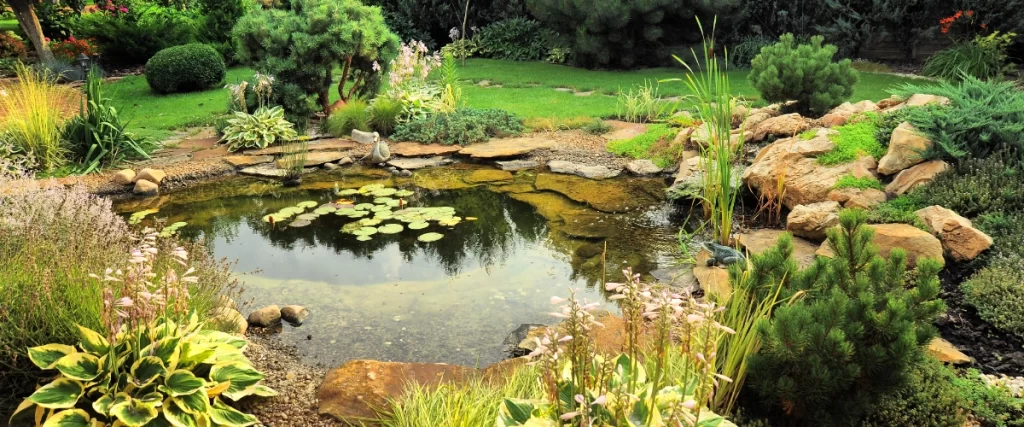
Pond care isn’t a once-a-year task. Each season brings its own set of priorities.
Spring is the time to reset. After winter, there’s usually a buildup of debris on the pond’s edge and beneath the surface. Get in there and:
- Remove dead leaves and organic matter from the bottom
- Check your pump and filtration system
- Inspect plants for new growth and trim back anything that didn’t survive
- Test your water quality before adding new plants or fish
Summer is when algae really wants to take over. Hot weather and longer days mean more sunlight hitting the pond surface, which fuels plant growth and algae alike.
If you have fish, be careful not to overfeed them. Uneaten food breaks down and adds nutrients to the water. Also, watch oxygen levels during heat waves, and consider running your pump continuously.
Fall leaves are the enemy of a healthy pond. If your pond is near trees, you may want to net it temporarily to keep debris out. Remove any dying aquatic plants before they decompose in the water.
Winter and colder climates are the time to keep a section of your pond ice-free. A frozen-over pond traps carbon dioxide beneath the surface, which can be harmful to fish. A small pond heater or aerator placed near the surface handles this well.
Managing Algae Growth
Not all algae is bad. A thin layer on rocks and surfaces is actually part of a healthy pond ecosystem. But you should start paying attention when algae blooms take over, and the water turns green or murky.
The main drivers of excess algae are:
- Too much sunlight hitting the open water
- High nutrient levels from runoff or overfeeding
- Poor circulation or low oxygen
One of the most effective ways to reduce algae naturally is through aquatic plants. Submerged plants and oxygenating plants compete directly with algae for nutrients. The more they thrive, the less algae can.
Surface coverage matters too. Ideally, you want around 50-70% of your pond’s surface shaded by floating or emergent plants. That reduces sunlight penetration and keeps water temperatures more stable.
Choosing and Managing Pond Plants
Plants are doing a lot of heavy lifting in your pond. They produce oxygen, filter nutrients, provide habitat for wildlife, and shade the water against algae.
Here’s a quick breakdown of the plant types worth knowing:
| Plant Type | Examples | Main Benefit |
| Submerged plants | Hornwort, water milfoil | Oxygenate water, filter nutrients |
| Emergent plants | Cattails, reeds | Stabilize edges, provide wildlife habitat |
| Floating plants | Water lilies, duckweed | Shade, reduce algae |
| Native plants | Varies by region | Low maintenance, support local wildlife |
When you’re adding new plants, native species are almost always the better choice. They’re adapted to local conditions, require less maintenance, and are far less likely to become invasive.
The U.S. Fish and Wildlife Service has resources on selecting native aquatic plants for your region, which can be a genuinely useful starting point.
Make sure to manage plant growth over time. Overgrown aquatic plants can choke a small pond just as badly as algae can. Thin them out in late summer or fall, and compost the cuttings rather than leaving them near the water’s edge where they’ll just wash back in.
Keeping the Water Clear and Healthy
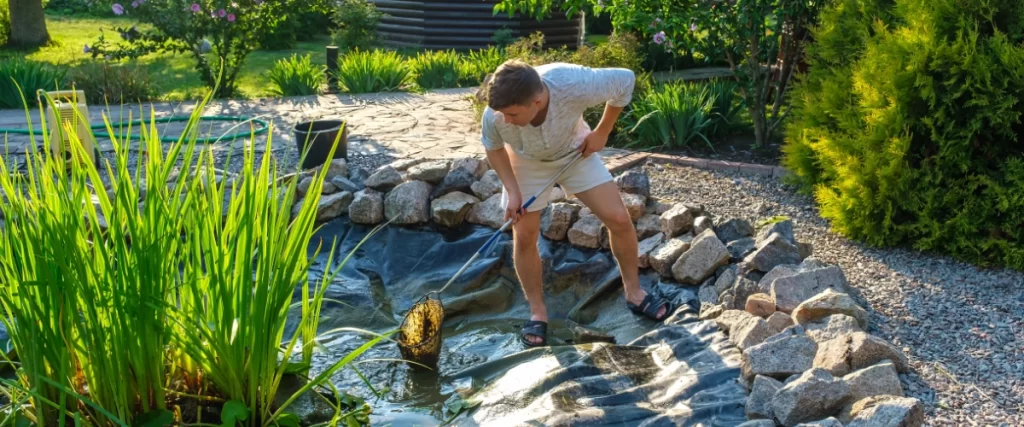
Good water quality is the foundation of pond health. Testing your water a few times a year, especially in spring and summer, lets you catch issues before they become serious.
A few things to watch for:
- pH levels: Most pond fish and plants do well between 6.5 and 8.5
- Ammonia: Spikes usually indicate too much organic debris or overfeeding
- Dissolved oxygen: Should stay above 5 mg/L for healthy aquatic life
If you’re dealing with consistently poor water quality, aeration is often the first fix to try.
A simple pump or air stone introduces oxygen and keeps water circulating, which discourages stagnant conditions where bacteria and algae thrive.
Also Read: How to Keep Mosquitoes Out of Pond
Protecting Wildlife and Managing the Pond Edge
A healthy pond attracts wildlife, and that’s a good thing. Frogs, birds, insects, and dragonflies are all signs that your pond ecosystem is functioning well.
But you want to set up the environment so they can actually use it.
A buffer strip of native grasses and shrubs along the water’s edge serves multiple purposes. It filters runoff before it enters the pond, provides habitat for wildlife, and reduces erosion. Keeping this area natural, rather than mowing right up to the edge, makes a big difference.
On the flip side, if you’re trying to deter wildlife like geese from overusing your pond, dense low plantings along the edge can actually work. Geese tend to avoid areas where they can’t clearly see predators.
Working With What You Have: Existing vs. New Ponds
If you’re dealing with an existing pond that has been neglected for several years, the approach is a bit different from starting fresh. You may need to do a partial water change, remove accumulated sediment, and essentially rebuild the ecosystem from the ground up.
New ponds, on the other hand, take time to establish.
Don’t get discouraged if the water is murky or plant growth is slow in the first season. A balanced pond ecosystem typically takes a full year, sometimes two, to stabilize naturally.
How to Maintain a Pond Without Losing Your Mind
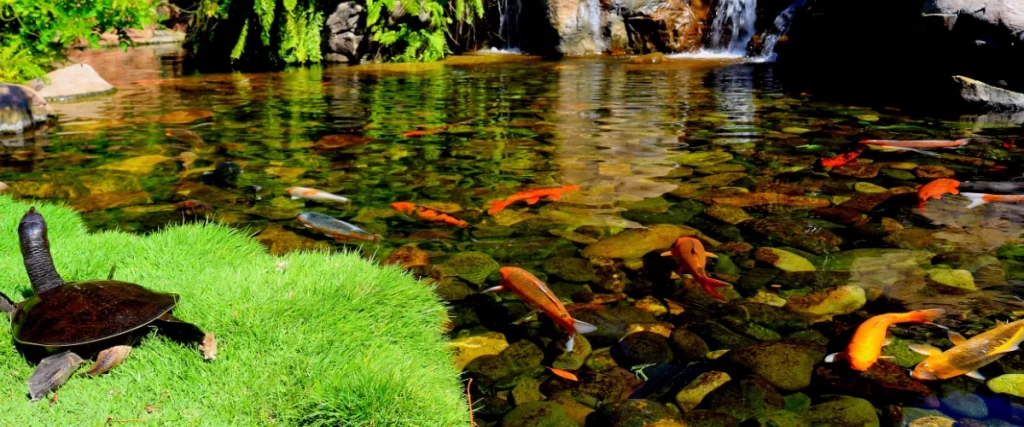
The honest version of pond maintenance is this: it’s manageable if you stay on top of it, and overwhelming if you don’t.
A little regular attention throughout the year keeps things in balance.
Not sure where to start? Our team at Site Pros Landscaping has put together practical guidance specifically for Florida homeowners, covering everything from seasonal care to water quality management.
FAQ: Common Pond Maintenance Questions
How often should I clean my pond? A full cleanout once a year, usually in spring, is standard for most residential ponds. In between, remove debris as it accumulates, especially in the fall.
Why does my pond keep turning green? Green water almost always means algae growth triggered by excess nutrients and sunlight. Adding more plants, improving circulation, and testing your water for nutrients are the first steps.
How do I keep my pond healthy in winter? Keep an opening in the ice using a pond heater or aerator. Don’t break ice by force, as the shockwaves can harm fish. Reduce feeding as water temperatures drop, since fish metabolism slows and uneaten food will just foul the water.
What plants are best for improving water quality? Submerged oxygenating plants like hornwort are among the best. Water hyacinth and water lettuce are also effective at pulling excess nutrients from the water, though check local regulations before planting them.
We’ll Take Care Of It
Maintaining a pond well takes time, seasonal attention, and a fair bit of know-how.
Site Pros Landscaping handles pond maintenance for homeowners throughout Florida, so you can actually enjoy your pond instead of spending your weekends troubleshooting it.
Call us at (407) 480-0713 or message us here, and we’ll tell you the best way to take care of your water feature.