
Koi pond gravel is one of those topics that splits pond owners right down the middle. Some swear by it, others won’t go near it.
The truth is, it depends heavily on how your pond is built, how much maintenance you want to do, and what kind of environment you’re trying to create for your fish.
This article covers when gravel makes sense, when it doesn’t, how to use it correctly, and what the long-term reality looks like for your pond ecosystem.
What Gravel Actually Does in a Koi Pond
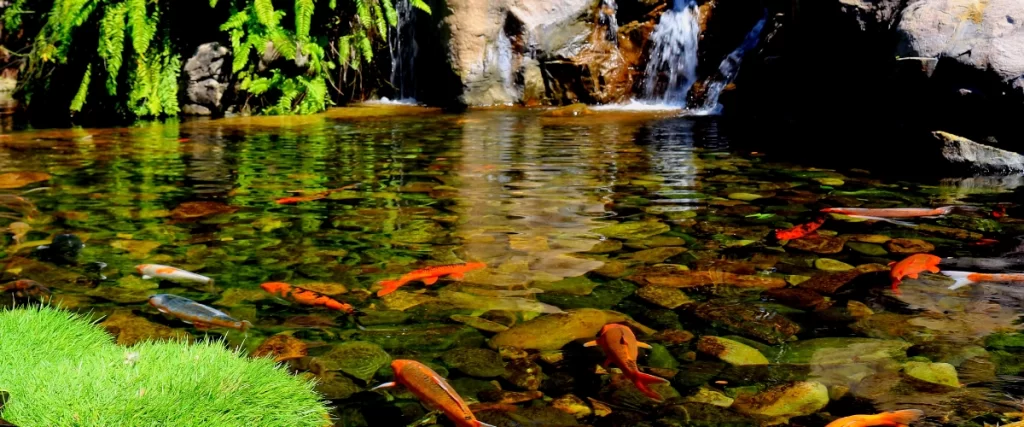
Let’s start with the pros of having gravel in your koi pond:
- Biological filtration. Beneficial bacteria need surface area to colonize, and gravel provides plenty of it. These bacteria break down ammonia from fish waste into less harmful compounds, which is the backbone of a healthy pond.
- Protects the pond liner. A bare liner sitting under direct sunlight degrades faster over time. A thin layer of stone creates a buffer between the liner and UV exposure, physical damage, and the weight of larger rocks or boulders you might place later.
- Beautiful, natural look. Fish love exploring textured surfaces, and gravel creates small fish caves and hiding spots that reduce stress, especially for koi that feel exposed to predators.
The Case Against Gravel on the Bottom
Fish waste, uneaten food, and leaves settle into the gravel and stay there. Over time, that debris accumulates into a layer of muck that’s genuinely difficult to pull out.
If your pond doesn’t have a bottom drain, that organic matter just sits and decomposes, releasing ammonia back into the water.
A lot of pond owners who go gravel-heavy end up dealing with water quality problems they can’t trace back to an obvious source. The culprit is usually what’s stuck in that gravel.
Gravel vs. No Gravel: A Quick Comparison
| Feature | Gravel Bottom | Bare Liner |
| Beneficial bacteria surface area | High | Low |
| Debris accumulation | High | Moderate |
| Liner protection | Yes | No |
| Ease of cleaning | Harder | Easier |
| Natural look | Yes | No |
| Works well with a bottom drain | No | Yes |
| Cost | Moderate | Lower |
When Putting Gravel in a Koi Pond Actually Works
For smaller water features, decorative ponds, or setups with few fish, gravel on the bottom can work beautifully without becoming a maintenance nightmare.
A few things that make gravel work better:
- Skimmers that pull surface debris before it sinks
- Aquatic plants that absorb nutrients and slow algae growth
- Larger rocks placed on shelves and edges instead of deep gravel coverage across the entire pond bottom
- Regular brushing to push settled debris toward drains
Remember: the less fish waste going into the system, the less likely debris is to overwhelm the gravel over time.
The Right Way to Use Koi Pond Gravel
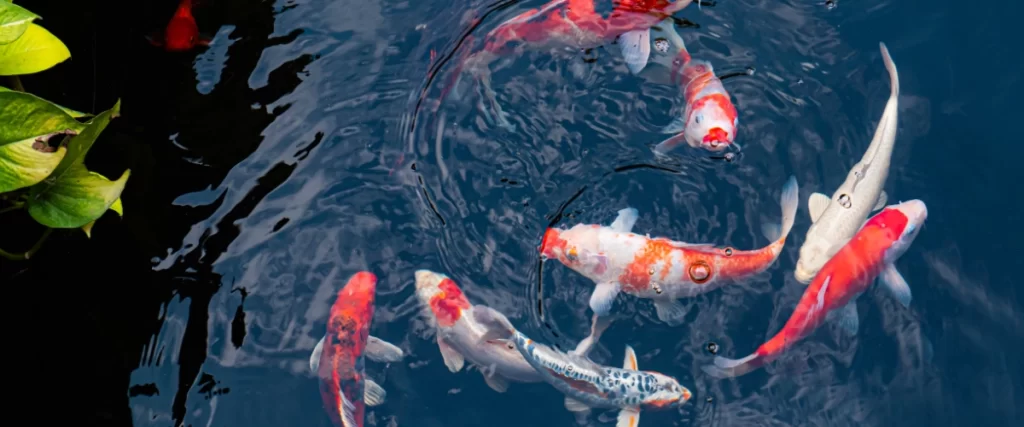
If you’ve decided gravel is right for your setup, how you use it matters a lot.
Keep It Thin
A thin layer, around 1 to 2 inches, allows beneficial bacteria colonize enough surface area without creating a deep trap for fish waste. Go thicker, and you’ll collect lots of debris instead.
Choose the Right Stone
Smooth, rounded river rock tends to accumulate less debris than jagged stone with lots of crevices.
Color matters if you care about contrast and aesthetics. Darker gravel tends to make koi colors pop, while lighter stone can make algae more visible.
Avoid limestone or any stone that could leach calcium into the water, raising your pH over time.
Don’t Forget the Liner
Gravel protects the liner, but it also hides it. Before putting gravel down, make sure your liner is in solid condition. Once it’s covered, any slow leaks become much harder to find.
Gravel and Algae: How to Keep The Balance
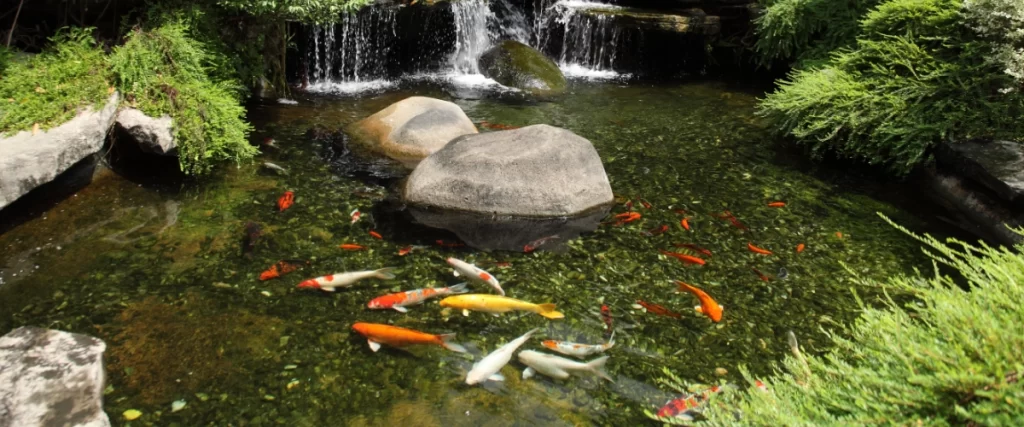
In some setups, gravel can increase algae. That’s not always bad since some algae are part of a healthy ecosystem.
But if you’re already fighting green water, adding more surface area for algae to grow on isn’t going to help.
The fix is to try to keep the balance. You can do this by adding more aquatic plants to compete with algae for nutrients, provide appropriate shade, and avoid overstocking fish.
Gravel in Koi Pond FAQs
Does gravel help or hurt water quality in a koi pond? It can do both, depending on how it’s managed. Gravel supports beneficial bacteria, which improve biological filtration. But it also traps debris, which increases ammonia over time if not cleaned regularly.
How deep should koi pond gravel be? One to two inches is the sweet spot. Deeper than that, and you’re creating a place for waste to settle and decompose.
Can I add gravel to an existing koi pond? Yes, but it’s easier to do during a pond cleanout when you can properly place it. Adding gravel to a pond full of water without stirring everything up is tricky.
What’s the best type of gravel for a koi pond? Smooth river rock or pea gravel in the 0.5- to 1-inch range works well. Avoid sharp stones that could injure fish and stay away from limestone.
Do koi actually like gravel? They do tend to interact with it, foraging along the bottom and exploring gaps between stones. It adds environmental enrichment, which reduces stress.
Will gravel damage my pond liner? A layer of gravel actually protects your liner from UV damage and physical wear. Just make sure no sharp-edged stones are pressing directly against a thin liner.
Thinking About Skipping All of This?
Honestly, getting koi pond gravel right means thinking through your fish load, filtration setup, maintenance schedule, and long-term goals for the pond. It’s a lot of variables, and getting it wrong leads to years of water quality problems.
If you’d rather have someone handle the whole thing correctly from the start, call us at (407) 480-0713 or message us here. We’ve built ponds across Florida and know exactly how to design a system that stays beautiful without turning into a weekend project every few months.