
Finding a pond leak can feel frustrating, especially when your water level keeps dropping and the cause is not obvious.
You may notice wet areas near the edge, a dry pond bottom forming where water once sat, or several inches of water loss over a short period. These signs point to one question many pond owners ask: how to find a leak in a pond without turning the entire pond into a guessing game.
This process takes patience, observation, and a clear plan. If you understand where water normally goes and where it should not, you can start narrowing down the general area and determine what is happening beneath the surface.
Start By Understanding Normal Water Loss
Before assuming you have a pond leak, take a moment to look at natural evaporation rates. During the summer months, higher temperatures, steady wind, and direct sun can cause normal evaporation of pond water. A shallow basin with moving water and a waterfall will lose more than a deep, shaded pond.
A simple way to check is to mark the water level along the edge or liner and monitor it over 24 to 48 hours. If the drop is slow and steady, this could be normal evaporation. If you are losing several inches each day, especially in cooler weather, then a leak becomes the most likely answer.
Pay attention to:
- Water level changes
- Temperature
- Wind
- Rain patterns
These details help you decide your next step with more confidence.
Also Read: Koi Pond Pump Stopped Working? Here’s What to Do
Inspect The Pond Surface And Visible Areas
Walk slowly around the entire pond and study the water surface. Look for changes in water flow, unusual ripples, or quiet spots where the surface looks lower. Then turn your attention to the edges and pond bottom.
A dry pond edge, exposed liner, or patch of soil that feels unusually wet often gives away the location of leaks. You may notice grass that stays wet or a soft area underfoot. These visual clues help locate the problem without draining the basin right away.
Focus on:
- Wet areas
- Dry pond sections
- Exposed liner
- Discolored soil
Each of these gives more information about where water loss may occur.
Check Pipes, Skimmers, And Waterfalls
The most common cause of a pond leak often hides in the plumbing system. Pipes, pumps, skimmers, and waterfalls experience constant pressure and water flow. Over time, a small crack, loose fitting, or weak seal can develop.
Turn off the pump and observe the water level. If the water level stops dropping, the leak likely sits in a pipe, line, or waterfall return. If the level keeps falling, the issue may lie in the pond liner or the pond bottom.
Here are key areas to review:
- Pump connections
- Pipe fittings
- Waterfall seams
- Skimmer boxes
Even a small hole in a pipe can cause consistent water loss.
Use Dye Tablets To Pinpoint The Leak
Dye tablets offer a gentle and effective way to locate a slow leak. Place the dye near the suspected area and watch how it moves. If water is being pulled through a hole or weak spot, the dye will drift directly toward it.
This method works well along:
- Seams
- Liner folds
- Rock edges
- Waterfall base
Using dye helps you identify the general area without draining the entire pond, saving time and protecting fish and vegetation.
Examine The Pond Bottom Carefully
A leaking pond often shows itself along the pond bottom where clay, sand, or gravel may have shifted or compacted unevenly. Walk gently through the pond if safe, or observe closely from above if water depth allows.
Look for cracks in compacted soil, exposed liner, displaced rock, or areas where the surface appears lower. These are common places where leaks occur due to settling, groundwater movement, or material wear.
Common signs include:
- Soft spots
- Uneven basin
- Cracked clay
- Loose gravel
Each detail helps narrow down the location without relying on guesswork.
Consider Soil And Construction Materials
Different soil types impact how a pond holds water. Clay-rich soil can naturally seal small leaks, while sandy soil allows seepage at a much faster rate. If your farm pond or decorative pond sits on sand or mixed soil, water loss may occur more easily.
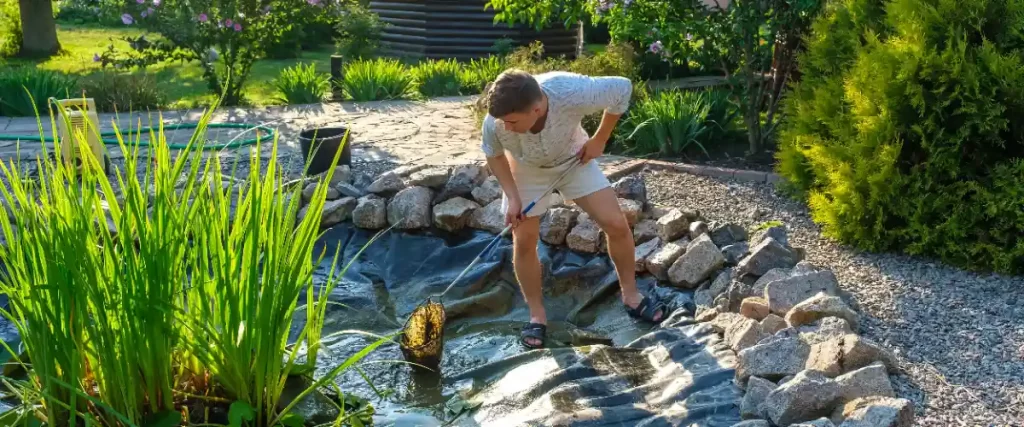
If a liner is present, check for punctures caused by rocks, roots, equipment, or wildlife. A single hole can slowly decrease water levels until a dry pond forms.
Materials to review:
- Liner condition
- Clay compaction
- Rock placement
- Vegetation roots
Each factor influences how sealing and repairing leaks should be handled.
Also Read: Best Material for Pond Liner
Test By Controlled Draining
When visual inspection does not locate the leak, controlled draining can help. Lower the water level slowly and observe at what point the water stops dropping. This depth often aligns with the height of the hole or damage.
Once you reach that level, inspect that zone carefully, especially along seams, edges, and areas with previous repairs. This process takes time, but it creates clarity and reduces random searching.
Use this method alongside dye or careful observation for the best results.
Repair Options Based On Leak Type
Once the leak is found, the repair process depends on its cause and location. Small punctures in liners can often be sealed with repair patches or waterproof sealant. Seepage through soil might require bentonite or granular bentonite, which expands when wet and creates a natural seal.
Common repair choices include:
- Liner patch kits
- Granular bentonite
- Compacted clay
- Cement sealing in specific areas
Each option should be chosen based on location, depth, and long-term durability.
Also Read: 15 Signs Your Pond Needs Repair
Watch The Results After Fixing
After sealing or repairing leaks, refill the pond and monitor water levels over several days. This confirms whether the repair is successful or if additional weak points exist.
Look for steady water levels and normal water surface behavior. Healthy flow combined with stable depth shows that the plan worked.
This stage calls for patience, not rushing, as slow leaks can take time to reveal themselves.
When The Process Becomes Overwhelming
Finding a pond leak involves careful observation, technical knowledge, and steady problem-solving. For some, this process feels satisfying. For others, it becomes time-consuming and stressful, especially when water continues to disappear despite every effort.
If you feel that point approaching, it may be smarter to let experienced hands step in. Our pond repair team regularly handles leaking ponds, repairing leaks, sealing liners, fixing seepage, and restoring balance while protecting fish and vegetation.
For more guidance and professional assistance related to how to find a leak in a pond, you can call us at (407) 480-0713 or message us here. We are happy to take care of your pond so you can enjoy the calm that water was meant to bring.