
Cars rolling in and out, temperature swings, rain, snow, and the relentless march of time all work together to wear down whatever material you choose for your driveway. When you’re investing thousands of dollars, you want to know it’ll still look good decades from now.
The longevity question between paver driveways and concrete driveways comes up constantly, and for good reason. You’re looking at a major investment that affects your home’s curb appeal, your daily convenience, and your wallet. Let’s walk through what actually determines how long each option lasts.
How Long Concrete Driveways Really Last
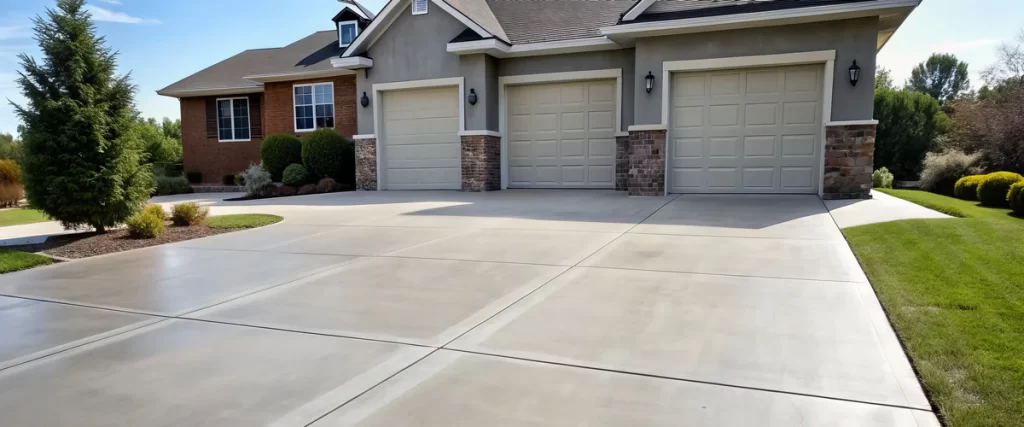
Traditional concrete creates a solid piece that can serve you well for 25 to 40 years with proper care. That’s a respectable lifespan for any driveway material. Poured concrete starts as a liquid that hardens into one continuous slab, giving you a uniform appearance that many homeowners appreciate.
The challenge with concrete slabs comes down to their single-unit design. When ground movement happens, and it always does eventually, the entire surface has to move together. Concrete cracks appear when the pressure becomes too much for the slab to handle as one piece.
Temperature changes create constant stress on concrete. During freeze-thaw cycles, water seeps into tiny pores, freezes, expands, and creates pressure from within. Do this hundreds of times over multiple winters, and you’ll see why concrete in cold-weather climates often fails before reaching that 40-year mark.
Concrete repairs can get complicated quickly. Small cracks spread. Surface damage becomes structural problems. Patching works temporarily, but you’ll notice the repairs because matching the color and texture of aged concrete is nearly impossible.
The Lifespan Reality of Paver Driveways
Individual pavers can last 50 to 100 years when installed correctly and maintained properly. Yes, that’s significantly longer than poured concrete. The secret lies in how pavers work as individual units rather than one rigid slab.
Driveway pavers flex with ground movement instead of fighting against it. When soil shifts underneath, each paver adjusts independently. This flexibility means pavers resist cracking in ways that concrete simply cannot match.
Permeable pavers add another layer of durability by allowing water to drain through the joints instead of pooling on the surface. Water runoff becomes less of an issue, and the freeze-thaw damage that destroys concrete happens far less frequently with properly installed paving stones.
The installation process for pavers creates a more stable foundation than traditional concrete. A proper base of compacted gravel and sand allows for drainage while providing support. Individual pavers sit on this base, locked together through friction and edge restraints.
What Actually Causes Driveways to Fail
Ground movement tops the list of driveway killers. Your soil expands and contracts with moisture and temperature. Clay soils move more than sandy ones. Poorly compacted fill dirt settles over time. These movements happen whether you notice them or not.
Heavy loads stress any driveway material. The average car weighs around 4,000 pounds, and that weight concentrates on a small contact patch where tires meet pavement. Multiply this by daily traffic, add in delivery trucks and moving vans, and you see why structural integrity matters.
Extreme temperatures push materials to their limits. Concrete expands in heat and contracts in cold. The bigger the temperature swings in your area, the more stress your driveway endures. Dark surfaces absorb more heat, making the problem worse during the summer months.
Water causes more damage than most people realize. It seeps into cracks, freezes, and breaks materials apart. It washes away base materials if drainage fails. The Federal Highway Administration has documented how water infiltration accelerates pavement deterioration across all types of surfaces.
Poor installation cuts the lifespan of any driveway in half or worse. Inadequate base preparation, improper grading, or skipped steps during installation create problems that appear within just a few years.
Maintenance Requirements Over Decades
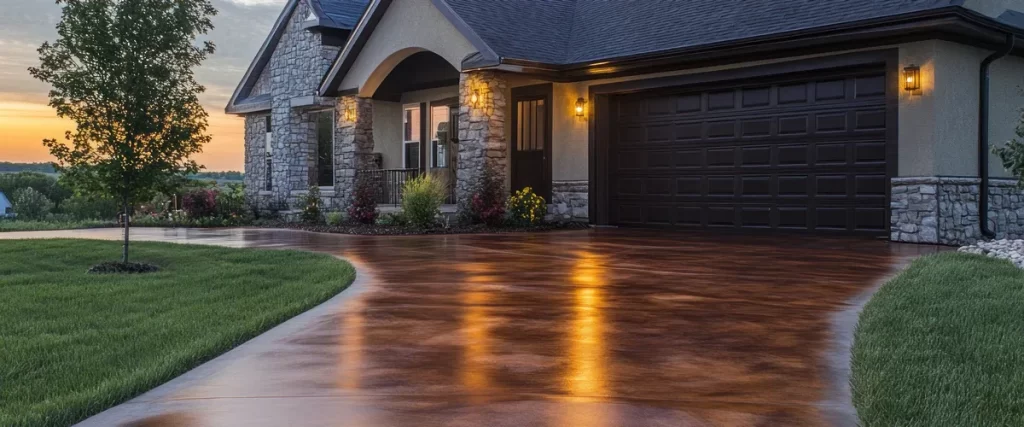
Concrete driveways need periodic sealing every two to three years to protect against water penetration and surface damage. You’ll want to fill cracks as they appear, though this becomes a losing battle after the first decade or so. Stains from oil, rust, or other substances can become permanent since concrete is porous.
Paver maintenance involves different tasks. Joint sand needs replenishment every few years as it washes away gradually. Periodic sealing helps maintain color and provides some stain resistance, though pavers offer more options than concrete if you choose to skip this step.
Here’s where pavers shine: when damage occurs, you replace individual pavers rather than the whole driveway. A single cracked paver costs a few dollars and takes minutes to swap out. Compare that to concrete repairs, which often involve cutting out sections, pouring new concrete, and living with visible patches.
Minimal maintenance over the long term favors pavers:
- Stain removal: Lift out stained pavers, flip or replace them
- Settling issues: Remove pavers, add base material, reinstall the same pavers
- Damage repair: Pop out broken units, drop in new ones
- Design changes: Reconfigure patterns without demolition
Cost Analysis Over the Driveway’s Lifetime
Pavers cost more upfront, typically $10 to $30 per square foot installed, compared to $6 to $12 per square foot for concrete. That initial sticker shock causes many homeowners to choose concrete as the cost-effective option. But look at maintenance costs over 30 years and the picture changes.
Concrete repairs add up. Sealing costs money. Eventually, you’ll face resurfacing or complete replacement. When a concrete driveway reaches the end of its useful life, you’re looking at total demolition and starting over from scratch.
Paver installation costs more initially, but the investment pays off through reduced long-term expenses. Lower maintenance requirements mean less money spent year after year. The ability to replace individual pavers instead of whole sections saves thousands in repair costs.
Think about resale value, too. Homes with paver driveways typically command higher prices than comparable properties with concrete driveways. Buyers recognize the superior aesthetic appeal and understand they’re getting a more durable product.
How Climate Affects Long-Term Performance
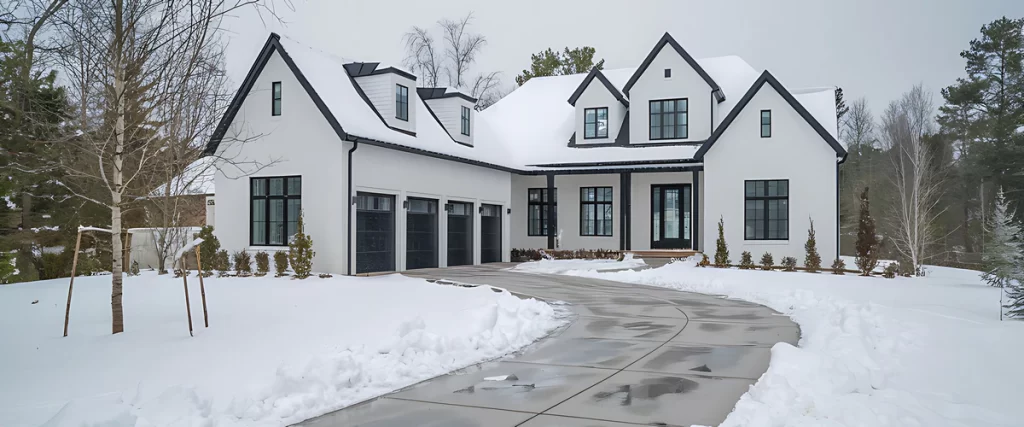
Cold weather punishes concrete driveways relentlessly. Each winter brings another round of freeze-thaw cycles that create and expand cracks. Road salt and de-icing chemicals accelerate surface deterioration. Concrete in northern climates rarely reaches its theoretical maximum lifespan.
Pavers handle freezing temperatures better because individual units can shift slightly without breaking. The joints between pavers allow for expansion and contraction. Water drains through permeable systems instead of sitting on the surface waiting to freeze.
Hot climates present different challenges. Concrete absorbs and holds heat, making surfaces uncomfortable and contributing to the urban heat island effect. Stamped concrete with decorative finishes can fade and deteriorate under intense sun exposure.
Pavers provide more options for managing heat. Light-colored options reflect more sunlight. The material stays cooler underfoot than traditional concrete, making barefoot trips to the car less painful during summer.
Design Flexibility and Future Changes
Stamped patterns in concrete try to mimic the look of pavers or natural stone, but they remain a solid slab underneath the surface texture. If you grow tired of the design, you’re stuck with it unless you’re willing to pay for a complete replacement.
Individual pavers give you customization options that concrete cannot match. Different colors, sizes, shapes, and laying patterns let you create unique designs. Many landscape design professionals prefer working with pavers because of this creative flexibility.
Future changes become simple with pavers. Need to run a new utility line under your driveway? Remove the pavers in that area, dig your trench, backfill properly, and reinstall the same pavers. Try that with concrete and you’ll have an ugly patch that screams “repair” for the rest of the driveway’s life.
Environmental Considerations That Matter
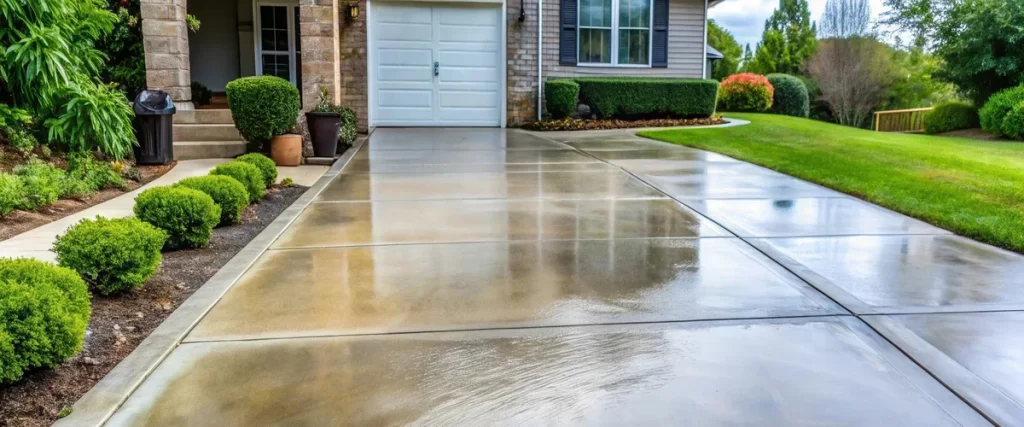
Permeable pavers reduce water runoff, helping prevent erosion and reducing the load on storm sewer systems. This eco-friendly approach matters increasingly to municipalities dealing with stormwater management issues.
Traditional concrete creates an impermeable surface that sheds water rapidly. Every drop that hits your driveway runs off into the street, picking up pollutants and overwhelming drainage systems during heavy rain.
The environmental impact extends to urban heat islands. Concrete’s heat absorption contributes to higher temperatures in developed areas. Lighter-colored pavers and permeable systems that allow evaporation help moderate these effects.
Making Your Decision With Confidence
Both options can serve you well under the right circumstances. A concrete driveway offers a lower upfront cost and a straightforward solution for homeowners on a tight budget. Proper maintenance extends its life, though you’ll eventually face the limits of its single-slab design.
Pavers provide superior longevity, better performance under stress, and flexibility that concrete cannot match. The higher initial investment pays dividends through decades of reliable service and minimal repair needs.
Your dream driveway deserves more than a guess based on initial price tags. The right material depends on your climate, soil conditions, budget flexibility, and long-term plans for your property.
Let Professionals Handle the Heavy Lifting
After reading about base preparation, drainage requirements, installation techniques, and long-term maintenance schedules, you might be feeling overwhelmed. Installing a driveway that lasts requires expertise that comes from years of hands-on experience with both materials.
You could spend weeks researching contractors, comparing bids, and hoping you’re making the right choice. Or you could work with a team that’s already proven their expertise across countless installations.
SitePros Landscaping has helped homeowners throughout the area choose and install driveways that stand the test of time. We understand local soil conditions, climate challenges, and what actually works in real-world conditions. Our team handles everything from material selection to final driveway paver installation, so you get a driveway built right the first time.
Why gamble with your home’s curb appeal and your financial investment? We’ll assess your property, discuss your goals and budget honestly, and recommend the solution that makes sense for your specific situation.
Ready to stop worrying about whether your driveway will last? Call us at (407) 480-0713 or message us here to schedule a consultation. Your outdoor space deserves a driveway that’s still looking great decades from now.