
Your pond is losing water, and you want to know why before it gets worse. Here’s the short answer: most of the time, it’s just evaporation, especially here in Central Florida, where the summer heat is relentless.
But there are several other reasons a pond loses water, and some of them do need attention.
Below, you’ll find every common cause, how to tell them apart, and what actually needs to be done about each one.
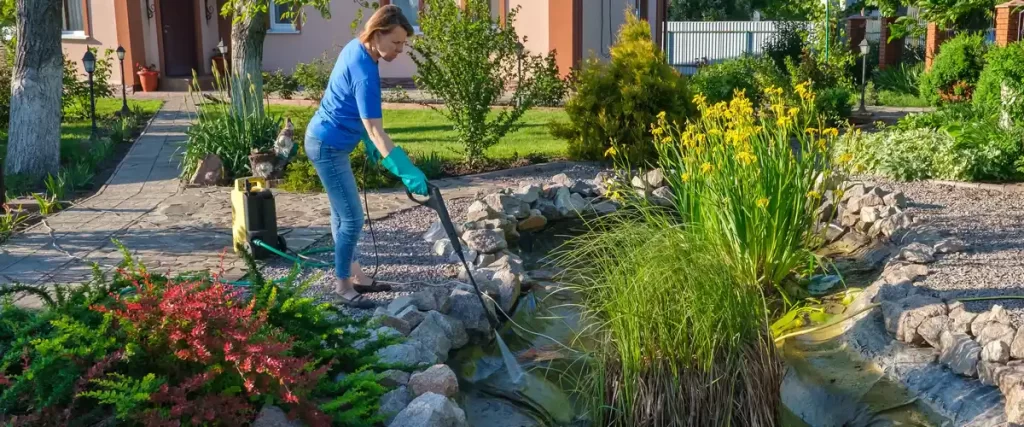
Is It Normal for a Pond to Lose Water?
Yes, completely. Every pond naturally loses water every single day through evaporation, plant uptake, and minor splash from water features.
A steady loss of around an inch per week is normal in most conditions.
In Florida’s heat and direct sun, that rate climbs. The University of Florida IFAS Extension’s research on Florida pond water management notes that evaporative losses in Florida ponds can approach six inches per month during summer (roughly one and a half inches per week).
That said, if you’re losing several inches overnight, or the ground around the pond stays soggy, that’s worth investigating.
5 Common Causes of Pond Water Loss
Evaporation
In hot weather, you can lose between one and two inches per week just through the water surface. Add wind, full sun exposure, and Florida’s dry winter months into the equation, and that rate goes up.
Ponds with waterfalls or fountains lose even more through evaporation. Moving water creates more surface area exposed to air, and more air contact means faster evaporation.
If your pond is in direct sunlight most of the day, aquatic plants like water lilies can actually help by shading the surface and slowing the rate down.
Leaks in the Pond Liner
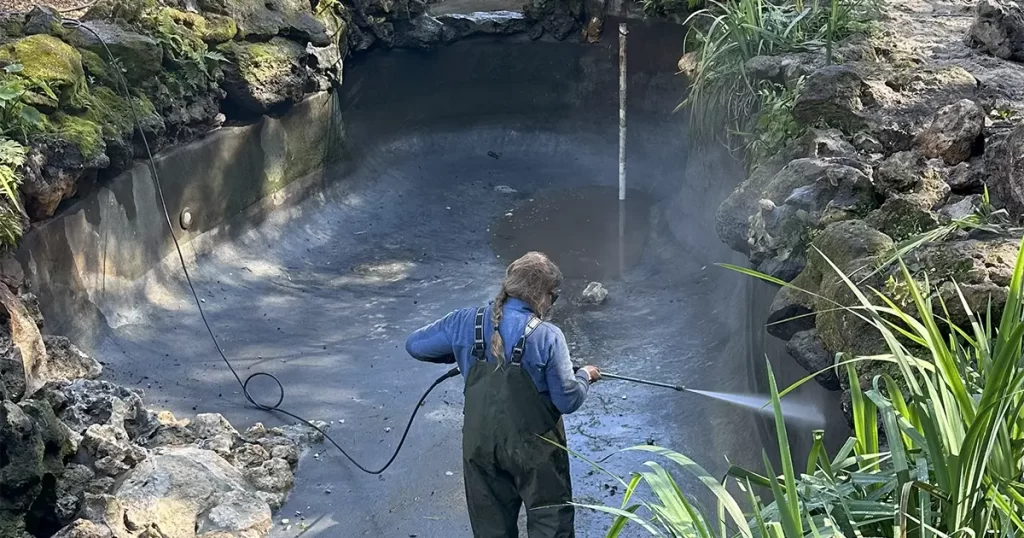
Punctures, rips, or tears can develop over time from sharp rocks underneath the liner, invasive roots, UV exposure, or just normal wear.
Small holes are surprisingly hard to spot, but even tiny ones can drain a significant amount of water over days.
Here’s a simple trick: turn off the pump and let the water level drop on its own. Wherever it stops is very close to the hole. The liner just above that waterline is where you want to look.
Minor holes can be fixed with a patch kit. Larger damage may require a section replacement or a full re-liner.
Plumbing or Equipment Problems
Pond pump housings are often made of plastic, which can become brittle over time, cracking at joints and fittings.
A small crack in a pipe or a loose connection on the return line can leak a surprising amount of water before you ever notice it.
The filter box is another common culprit. When the filter media clogs up, water backs up and spills out of the unit instead of returning to the pond. Rinse the sponges and media regularly to prevent this.
Also, check whether your pump is properly matched to your filter, since an overpowered pump can push more water through than the filter can handle, causing it to spill.
Structural Issues
Uneven or low pond edges are a common cause of water escaping at the rim. If one section sits even a little lower than the rest, that’s where water will flow when levels rise after rain.
The liner can also shift out of position at the edges due to ground movement, heavy rainfall, or wildlife climbing in and out.
Tree roots are a slower problem, but they can work under the liner over time and create gaps that let water out.
Splash-Out or Overflow
Waterfalls and water features are beautiful, but if they aren’t positioned correctly, they scatter water outside the pond with every cycle. Even a small spray hitting the rocks or surrounding soil adds up over hours and hours of circulation.
Spend a few minutes watching the waterfall in action, especially on a windy day. Sometimes all it takes is repositioning a rock or adjusting the flow rate to send the water back where it belongs.
Pond Water Loss Overnight: When to Be Concerned
Losing an inch of water over a full week is expected. Losing that same inch in a single night is not. Significant overnight pond water loss almost always points to a liner leak, a plumbing failure, or a problem with the skimmer or return line.
If your fish are stressed or clustering at the surface, and the water level has dropped noticeably by morning, act quickly.
Letting water levels fall too low reduces oxygen and puts fish at serious risk. That’s when DIY troubleshooting stops being the right move.
How Professionals Diagnose Pond Water Loss
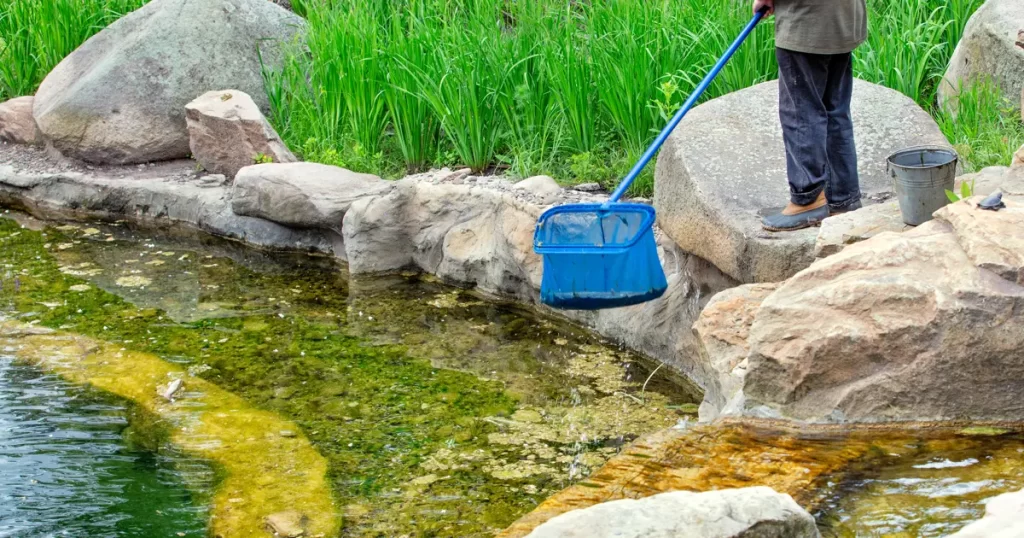
A trained pond contractor will typically:
- Do a bucket test by filling a bucket with pond water, marking the level, and placing it in the pond with the rim just above the waterline. After 24 hours, if both dropped the same amount, it’s evaporation. If the pond dropped more, there’s a leak.
- Shut off the pump to isolate whether the loss is in the liner or the plumbing
- Let the water settle and find where it stabilizes, which points to where a liner hole may be
- Inspect the skimmer box, all hoses, and pipe connections for moisture or visible damage
- Walk the perimeter to check for saturated soil, displaced liner, or low edges
At Site Pros Landscaping, our pond maintenance service includes checking the liner for signs of compromise and inspecting the pump, skimmer, and filtration system for leaks or drainage issues during every visit.
Signs Your Pond Has a Leak
Not every water loss is a leak, but these signs suggest it might be:
- Water level drops more than two to three inches per week
- Pond water loss overnight is significant
- The ground around the pond is consistently wet, even without rain
- Water level drops and then stops at a specific point rather than continuing
- The pump is running dry or struggling
How to Fix Pond Water Loss
The fix depends entirely on the cause. That’s why diagnosis comes first. But generally:
- Evaporation: Top off regularly with dechlorinated water. Add shade plants. Monitor levels week to week.
- Liner hole: Locate the puncture, let the area dry, and apply a liner patch kit or sealant. For detailed guidance on liner repair, Aquascape has repair and care resources on its website.
- Plumbing or equipment: Replace cracked fittings, tighten loose connections, clean or replace filter media, and make sure the pump and filter are properly matched for flow rate.
- Edge and structural issues: Reposition the liner, secure it with rocks or edging material, and regrade the surrounding soil if needed.
- Splash-out: Adjust rocks, lower the flow rate, or redirect the waterfall stream back toward the pond.
FAQ: Why Is My Pond Losing Water?
How much water should a pond lose per week?
Most backyard ponds lose between 1 and 3 inches per week, depending on the season, sun exposure, and whether a waterfall or fountain is running. In Florida’s summer heat and full sun, losses of up to 1.5 inches per week are completely normal. Anything beyond 3 inches warrants a closer look.
Why is my pond losing water overnight?
An overnight loss of more than a minor amount almost always means a leak in the liner, a plumbing fitting, or equipment. Shut off the pump and observe overnight to help narrow it down.
Can aquatic plants cause my pond to lose water?
Yes. Plants draw water from the pond, especially large blooming varieties like water lilies. They contribute to water loss, though usually not enough to explain a dramatic drop on their own.
How do I know if my pond is leaking or just evaporating?
Try a bucket test. Fill a bucket with pond water, mark the level, and place it in the pond with the rim just above the waterline. After 24 hours, compare how much each has dropped. The same amount means evaporation. If the pond dropped more, there’s likely a leak.
What should I do if my pond is drying up fast?
First, add water carefully to protect your fish, then turn off the pump to rule out plumbing as the source. If the level keeps dropping, call a professional. A pond drying up rapidly is a sign that something more serious is happening, and it needs to be addressed before it harms your fish or damages the ecosystem.
When to Call a Professional
If you’ve checked the obvious stuff and the pond is still losing water, it’s time to call someone. Chasing a leak without the right knowledge or tools tends to cost more time, money, and frustration than just getting it handled properly from the start.
Site Pros Landscaping has maintained over 100 ponds across Winter Springs, Casselberry, Longwood, and the surrounding Central Florida area. As Aquascape certified contractors, we know these systems inside and out, and we show up on time, every time.
If your pond is losing water and you’re not sure why, let us take a look. Call us at (407) 480-0713 or message us here.