
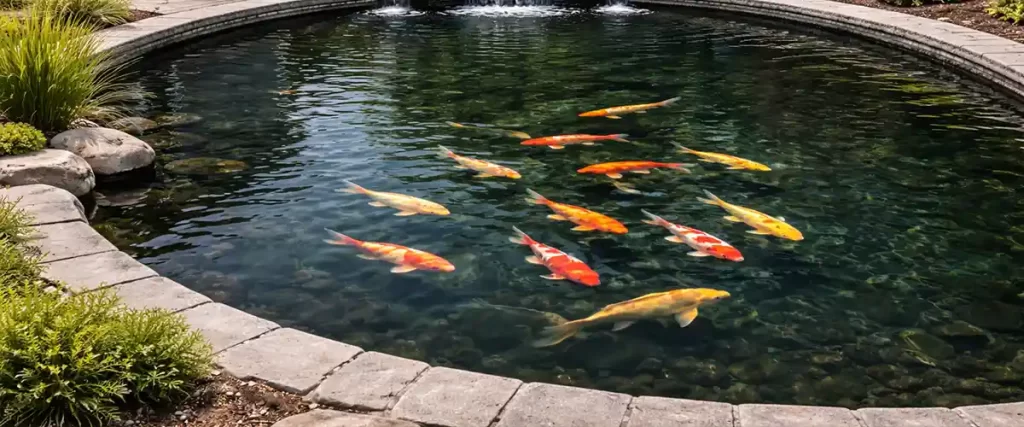
Most homeowners spend between $300 and $1,000 per year on backyard pond maintenance, though that number shifts a lot depending on pond size, whether you have koi fish, and how much of the work you handle yourself. A small garden pond with no fish and a basic filtration system sits on the lower end. A koi pond with a skimmer, biological filters, and regular professional cleanings can run higher, particularly when you factor in spring cleanouts and water treatments.
The cost question is usually the first one people ask, so here’s a clear breakdown before anything else.
Pond Maintenance Cost Overview
| Service | Average Cost |
| Spring pond cleanout (small pond) | $200–$400 |
| Spring pond cleanout (large pond) | $500–$1,500 |
| Single professional maintenance visit | $75–$200 |
| Annual maintenance plan | $400–$1,200 |
| Filter cleaning (add-on service) | $50–$150 |
| Water testing and treatment | $30–$100 per visit |
| Debris removal only | $50–$125 |
| Full koi pond annual maintenance | $800–$2,500 |
Prices vary by region, pond complexity, and what’s included in each visit. Central Florida ponds face year-round algae pressure and organic debris from surrounding vegetation, which tends to push maintenance frequency higher than in cooler climates.
What Regular Pond Maintenance Actually Involves
Pond upkeep goes beyond scooping leaves off the surface. A properly maintained pond needs consistent attention across several systems at once: water quality, filtration, fish health, and plant balance.
The core tasks that make up regular pond maintenance include:
- Debris removal from the pond’s surface and the bottom, since decomposing organic matter feeds algae growth and stresses fish
- Filter cleaning, including mechanical and biological filters that break down fish waste and process ammonia
- Water testing to check pH, ammonia, and nitrate levels, keeping the pond environment stable for aquatic life
- Algae management through water treatments, beneficial bacteria, and shade from aquatic plants
- Pump and skimmer checks to confirm water flow is consistent
A spring cleanout is typically the biggest single service of the year. Pond contractors drain a significant portion of the water, remove accumulated sludge, rinse the pond liner, clean all filters thoroughly, and refill with treated fresh water before reintroducing fish. In Florida, this is often followed by a fall maintenance visit as well.
If you’re curious about the more detailed side of seasonal pond upkeep, our koi pond maintenance guide covers what to expect across each part of the year.
Are Koi Ponds More Expensive to Maintain?
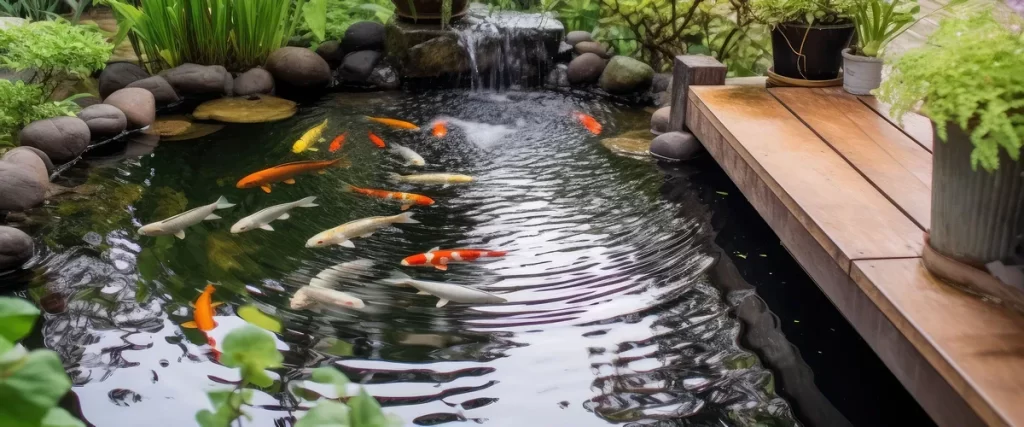
Koi ponds do carry higher maintenance costs than a basic garden pond, and the main reason is the fish themselves. Koi fish produce significantly more waste than smaller pond fish, which puts greater demand on filtration systems and water quality management. A healthy koi pond needs its entire water volume circulated multiple times per hour through the filtration system to keep ammonia and nitrates at safe levels.
Beyond filtration, koi ponds often require more frequent water testing, closer attention to water temperature in summer months, and the occasional professional intervention when something in the ecosystem gets out of balance. Add in the cost of the fish themselves, and it becomes clear why koi ponds are expensive to run properly. That said, a well-built koi pond with quality equipment and consistent maintenance runs efficiently for years without major surprises.
The USDA Natural Resources Conservation Service publishes guidance on water quality management for backyard ponds, which is worth reading alongside any professional maintenance plan.
What Makes Pond Maintenance Costs Go Up
Pond size is the biggest cost driver, but it’s not the only one. Several factors push the average annual cost higher:
- Pond size and depth: larger ponds need more water treatments, more equipment, and longer cleaning time per visit
- Fish population: more fish equals more waste, faster algae growth, and more frequent filter cleaning
- Surrounding vegetation: heavy tree coverage drops debris into the pond constantly, increasing the workload for skimmers and cleaners
- Equipment age: older pumps and filtration systems work harder and require more maintenance attention than newer installations
- Neglect between visits: skipping regular maintenance leads to more intensive and expensive professional cleanings when problems compound
The relationship between DIY maintenance and professional services also matters for the budget. Many pond owners handle weekly debris removal and surface skimming themselves, then bring in professional pond cleaners for the spring cleanout and any seasonal treatments. That hybrid approach usually saves money while keeping the pond in good condition throughout the year.
For everything you’d want to know about building a pond with future maintenance in mind, our post on how hard it actually is to build a pond covers the setup decisions that affect long-term upkeep costs directly, an important consideration if you’ll eventually need a pond maintenance professional to keep your water feature healthy and functioning properly.
FAQ
How often should a backyard pond be professionally cleaned? Most backyard ponds benefit from a professional spring cleanout each year, plus at least one additional service visit in the fall. Koi ponds with heavy fish populations may need quarterly professional attention.
Can I do pond maintenance myself to save money? Yes, and many pond owners do. Weekly skimming, filter rinsing, and water testing are manageable DIY tasks. The spring cleanout is where most people bring in professional services, as it involves draining the pond and handling fish carefully.
Why do koi ponds cost more to maintain? Koi produce more waste than smaller fish, which requires a more powerful filtration system and more frequent water treatments to keep ammonia levels safe. The fish themselves also need monitoring for health and stress.
What happens if pond maintenance is skipped? Water quality deteriorates quickly without regular upkeep. Algae growth accelerates, oxygen levels drop, fish become stressed, and the pond liner and equipment degrade faster. A neglected pond typically costs significantly more to restore than one maintained consistently.
Your Pond Deserves Better Than a Yearly Crisis Call
Reading through maintenance schedules, filter cleaning intervals, and water treatment protocols is one way to manage a pond. The other way is having a team that handles it on a schedule so you spend your time actually enjoying the water, not troubleshooting it.
We offer pond maintenance services across Central Florida and know what it takes to keep koi ponds and backyard ponds running clean year-round. When you’re ready to talk through what your pond needs, take a look at our pond maintenance services and then call us at (407) 480-0713 or message us here. We’d love to help.